
How Are Manual Retractable Awnings Shaping Outdoor Living Choices Today?
2026-01-05
Article Abstract
Manual Retractable Awnings have become a practical and widely adopted outdoor shading solution for residential and light commercial environments. This article provides a structured, professional analysis of how manual retractable awnings function, how their technical parameters influence performance, and how buyers can evaluate suitability across different climates and architectural settings. The discussion is organized into four core nodes, covering product fundamentals, technical specifications, usage considerations, and evolving market direction, while also addressing frequently asked questions to support informed decision-making.
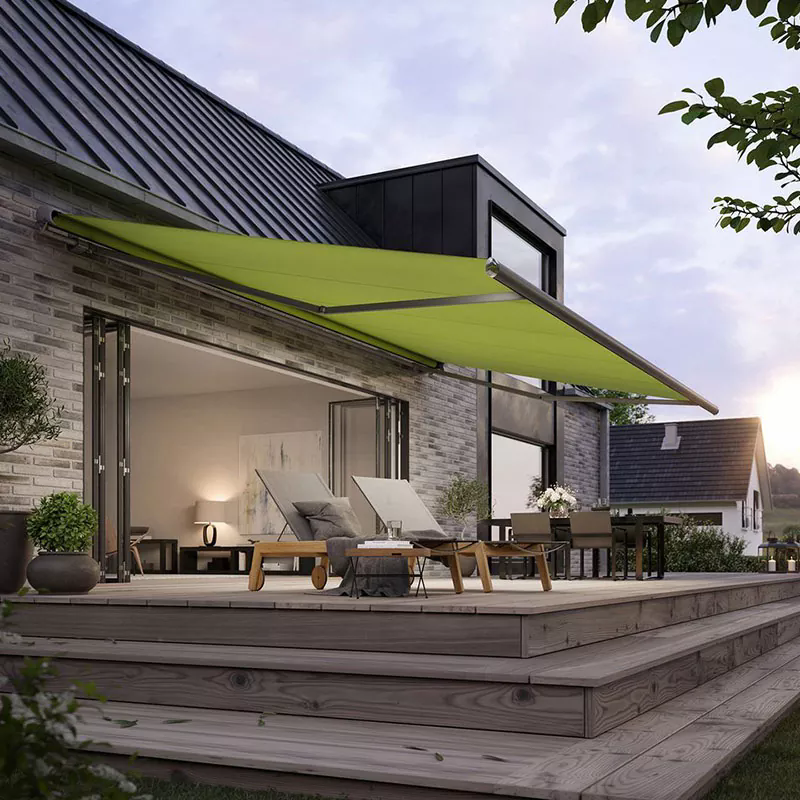
Table of Contents
- How Do Manual Retractable Awnings Work in Outdoor Spaces?
- How Should Manual Retractable Awning Specifications Be Evaluated?
- How Can Manual Retractable Awnings Be Used Across Different Scenarios?
- How Is the Future Direction of Manual Retractable Awnings Developing?
Content Outline
- Overview and functional principle
- Key technical parameters and materials
- Installation, maintenance, and application scenarios
- Industry development and user-driven trends
How Do Manual Retractable Awnings Work in Outdoor Spaces?
Manual Retractable Awnings are mechanically operated shading systems designed to extend and retract fabric canopies without electrical power. By using a hand crank or gear-based mechanism, the awning arms smoothly project outward to provide shade and retract when protection is not required. This operating principle offers users direct control, reduced system complexity, and consistent performance regardless of power availability.
Structurally, these awnings are mounted to exterior walls, soffits, or structural beams, allowing them to integrate seamlessly with patios, balconies, storefronts, and window areas. When extended, they reduce direct solar exposure, moderate surface temperatures, and help protect outdoor furnishings from UV degradation. When retracted, they preserve open sightlines and reduce wind exposure.
From a functional standpoint, manual retractable awnings are valued for reliability and longevity. The absence of motors and electronic components minimizes failure points, making them suitable for regions where weather variability or maintenance access may be a concern.
How Should Manual Retractable Awning Specifications Be Evaluated?
Evaluating Manual Retractable Awnings requires close attention to structural parameters, material performance, and mechanical design. These specifications directly affect durability, ease of operation, and long-term value.
| Parameter | Description |
|---|---|
| Frame Material | Typically aluminum alloy or steel, offering corrosion resistance and structural stability for outdoor use. |
| Fabric Type | Solution-dyed acrylic or polyester fabrics with UV resistance, water repellency, and colorfast properties. |
| Projection Length | Commonly ranges from 1.5 to 3.5 meters, determining the shaded area coverage. |
| Operating Mechanism | Manual crank system with internal gearbox designed for smooth extension and controlled retraction. |
| Mounting Options | Wall-mounted, ceiling-mounted, or roof-mounted configurations depending on architectural conditions. |
Attention to these parameters ensures the awning aligns with environmental exposure, user frequency, and installation constraints. Proper specification selection also reduces long-term maintenance requirements and improves overall system lifespan.
Manual Retractable Awnings FAQs
Q: How much effort is required to operate a manual retractable awning?
A: Modern manual crank systems are designed with balanced arm tension and gear reduction, allowing most users to extend or retract the awning smoothly with minimal physical effort, even at larger sizes.
Q: How well do manual retractable awnings perform in windy conditions?
A: When properly mounted and retracted during high winds, manual retractable awnings perform reliably. Retraction capability is a key advantage, as it reduces wind load on the structure when conditions become unfavorable.
Q: How long can a manual retractable awning typically last?
A: With quality materials and routine maintenance, manual retractable awnings can maintain functional performance for 10 to 15 years or longer, depending on environmental exposure and usage frequency.
How Can Manual Retractable Awnings Be Used Across Different Scenarios?
Manual Retractable Awnings are widely applied across residential patios, balconies, café terraces, and storefronts. In residential environments, they support flexible outdoor living by allowing homeowners to adjust shade coverage throughout the day. In commercial settings, they enhance customer comfort while maintaining visual openness during off-peak sunlight hours.
Climate adaptability is another defining advantage. In hot regions, these awnings reduce direct solar heat gain, contributing to lower indoor cooling demands. In temperate zones, retractability ensures that seasonal sunlight can still be utilized when desired.
Maintenance requirements remain straightforward. Periodic fabric cleaning, hardware inspection, and proper retraction during severe weather conditions help preserve appearance and mechanical integrity over time.
How Is the Future Direction of Manual Retractable Awnings Developing?
The future of Manual Retractable Awnings is shaped by material innovation, design adaptability, and user-driven preferences for sustainable, low-complexity solutions. Advancements in fabric coatings continue to improve UV resistance, water repellency, and color stability, while lightweight alloy frames enhance strength-to-weight ratios.
Market demand increasingly favors products that balance affordability with long-term durability. Manual systems remain relevant due to their independence from electrical infrastructure and reduced lifecycle costs. As architectural design trends emphasize flexible outdoor spaces, manual retractable awnings are expected to maintain steady adoption across both residential and light commercial segments.
Conclusion and Brand Reference
As outdoor living and functional shading continue to influence architectural planning, Manual Retractable Awnings remain a dependable and adaptable solution. Through careful evaluation of specifications, installation conditions, and usage requirements, these systems deliver long-term value and operational simplicity.
Within this evolving market landscape, Vionta focuses on providing manual retractable awning solutions engineered for structural reliability, material performance, and user-oriented operation. For project-specific guidance, product details, or technical consultation, interested parties are encouraged to contact us to explore suitable options tailored to individual outdoor environments.