

Does Heat Affect the Corrosion Resistance of Stainless Steel Laser Cutting Parts for Sheet Metal Applications
2026-07-06
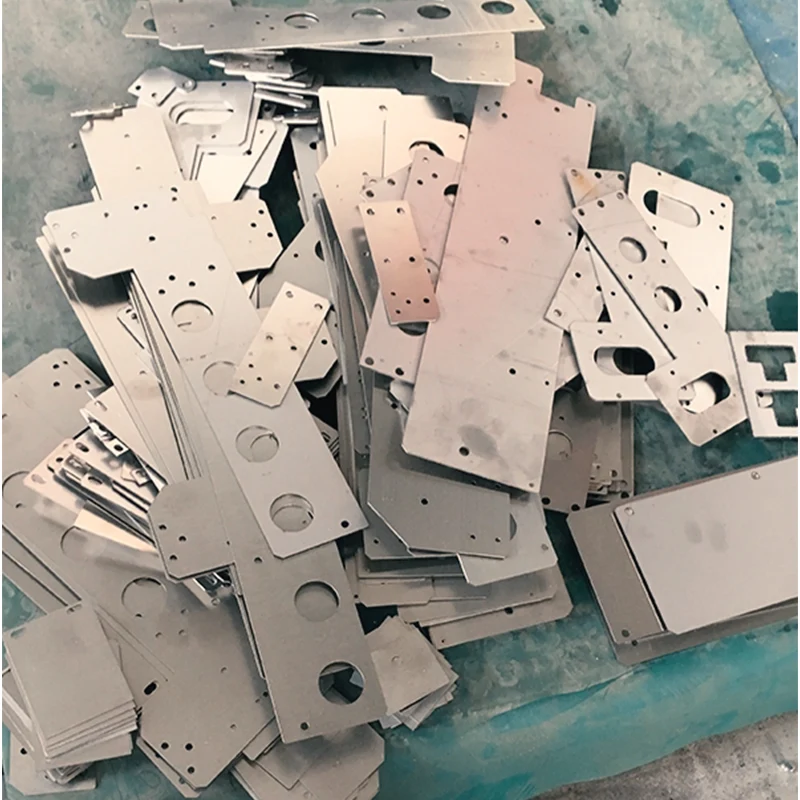
When manufacturers specify Sheet Metal Parts Stainless Steel Laser Cutting Parts, the primary assumptions are precision, durability, and long-term rust resistance. However, a critical question often overlooked is whether the laser cutting process itself—specifically the heat generated—can compromise the very corrosion resistance that makes stainless steel valuable. At S-SEN, we have conducted extensive metallurgical analyses on post-cut edges and found that thermal effects are not merely theoretical. The answer is yes, but the degree of impact depends on controllable variables. This article examines the science behind heat-affected zones (HAZ), offers data-driven mitigation strategies, and answers the most frequent concerns engineers raise about Sheet Metal Parts Stainless Steel Laser Cutting Parts.
The Science of Heat-Affected Zones (HAZ) in Stainless Steel
Laser cutting employs a concentrated beam exceeding 10,000°C to melt and vaporize material. While the cut itself is narrow, the adjacent metal experiences a thermal gradient. In austenitic stainless steels (e.g., 304, 316), this heat can trigger three detrimental phenomena:
-
Chromium Carbide Precipitation – When the HAZ temperature lingers between 450°C and 850°C, carbon combines with chromium to form carbides. This depletes the free chromium content below the 10.5% threshold required for passive film formation, leading to intergranular corrosion.
-
Residual Tensile Stresses – Rapid heating and cooling induce thermal expansion mismatches. These stresses create micro-cracks on the cut surface, providing initiation sites for pitting and crevice corrosion.
-
Oxide Layer Alteration – The molten edge reacts with atmospheric oxygen, producing a chromium-depleted oxide scale that is less stable than the native passive layer.
Quantitative Impact: Corrosion Test Results
To illustrate the real-world effect, S-SEN performed salt spray testing (ASTM B117) on 2mm-thick 304 stainless steel samples cut under different parameters. The table below summarizes findings after 240 hours of exposure:
| Cutting Condition | Edge Surface Roughness (Ra, µm) | Visible Pitting Area (%) | Passivation Recovery Time (hours) |
|---|---|---|---|
| High-power, slow speed (excessive heat) | 6.8 | 18.5 | 72 |
| Optimized power, fast speed (controlled heat) | 3.2 | 4.2 | 24 |
| Post-cut electropolishing (heat unaffected) | 1.1 | 0.8 | 8 |
Controlled heat parameters reduced pitting areas by nearly 77% compared to excessive-heat cuts.
Mitigation Strategies for Preserving Corrosion Resistance
S-SEN implements three core practices to ensure Sheet Metal Parts Stainless Steel Laser Cutting Parts retain their corrosion-resistant properties:
| Strategy | Application Method | Effectiveness |
|---|---|---|
| Nitrogen assist gas | Replaces oxygen to suppress oxide formation and reduce dross. | High – reduces HAZ depth by 30–40% |
| Pulsed-wave cutting | Uses intermittent bursts to lower average heat input. | Medium-High – minimizes chromium depletion |
| Post-cut pickling/passivation | Chemically removes the heat-tinted oxide layer and restores chromium-rich surface. | Very High – restores full corrosion resistance |
Additionally, S-SEN recommends maintaining a cutting speed above 3.5 m/min for thicknesses under 4mm to keep the HAZ below 400°C, effectively avoiding the sensitization temperature window.
Common FAQs About Sheet Metal Parts Stainless Steel Laser Cutting Parts
Q1: Can heat from laser cutting permanently destroy the corrosion resistance of stainless steel, or can it be restored?
A: The heat does not permanently alter the bulk metallurgy of the base material. The damage is confined to the recast layer and the heat-affected zone, typically 50–150 microns deep. This compromised layer can be entirely removed through mechanical abrasion (grinding) or chemical passivation. At S-SEN, we routinely restore full corrosion resistance by applying a nitric-citric acid passivation bath after cutting, which dissolves chromium-depleted regions and reforms a homogeneous passive film. For critical applications (e.g., marine or pharmaceutical environments), we recommend a minimum removal of 0.02mm from the cut edge followed by passivation, ensuring the part meets ASTM A967 standards.
Q2: Which stainless steel grades are more sensitive to heat-induced corrosion during laser cutting?
A: Austenitic grades with higher carbon content (e.g., 304H) are more susceptible because they contain more free carbon to precipitate chromium carbides. Low-carbon variants like 304L and 316L are specifically designed to resist sensitization, making them the preferred choice for Sheet Metal Parts Stainless Steel Laser Cutting Parts that undergo high-heat processing. Duplex grades (e.g., 2205) show intermediate sensitivity due to their ferrite-austenite structure, which slows carbon diffusion. At S-SEN, we always advise clients to select 316L for outdoor or chemical-exposure applications, as its molybdenum addition further enhances pitting resistance even if minor thermal effects occur.
Q3: How can I visually or non-destructively inspect laser-cut parts to confirm heat has not damaged corrosion resistance?
A: Visual inspection is the first step: a golden, blue, or dark brown discoloration along the cut edge indicates excessive oxide formation and suggests the HAZ exceeded 600°C—a warning sign. For quantitative assessment, S-SEN uses a non-destructive electrochemical test called the "ferroxyl gel test" (ASTM A380), which detects free iron and chromium-depleted areas by applying a gel that changes color within 60 seconds. Alternatively, eddy-current testing can map surface conductivity variations without contact. If the part passes these tests, no further action is needed. If it fails, we perform a mild pickling step that removes only 5–10 microns of surface material, restoring passivity without altering dimensional tolerances.
Best-Practice Process Flow at S-SEN
To guarantee consistency, S-SEN follows a documented thermal management protocol for every batch of Sheet Metal Parts Stainless Steel Laser Cutting Parts:
-
Material verification – Confirm grade and mill certificate.
-
Parameter tuning – Set power, frequency, and gas pressure based on thickness.
-
In-process monitoring – Use infrared thermography to track HAZ temperature.
-
Post-cut inspection – Perform ferroxyl gel test on first-article samples.
-
Optional passivation – Apply chemical treatment when specified.
-
Final salt-spot check – Random sampling per batch.
This systematic approach ensures that thermal side effects are either eliminated or reduced to negligible levels, preserving the inherent corrosion resistance of stainless steel.
Why Heat Management Separates Quality Suppliers
Many fabricators assume that laser cutting is a "cold" process relative to plasma or flame cutting. In reality, the energy density is far higher, and the cooling rate is so rapid that thermal shock becomes the primary concern. S-SEN invests in real-time adaptive optics that adjust focal position based on plate temperature, reducing HAZ variation by up to 50%. This level of control ensures that Sheet Metal Parts Stainless Steel Laser Cutting Parts leaving our facility consistently achieve Grade 5 corrosion resistance (ISO 9227) without secondary treatments unless requested.
Final Recommendation
Heat does affect corrosion resistance, but the effect is predictable, measurable, and entirely manageable through correct parameter selection, auxiliary gas choice, and optional post-processing. Specifying Sheet Metal Parts Stainless Steel Laser Cutting Parts from a supplier who monitors thermal input is not a luxury—it is a technical necessity for long-term performance.
Contact Us
If you are designing components that demand both precision cutting and uncompromised corrosion resistance, S-SEN is ready to support your project with validated processes, full traceability, and engineering consultation. Reach out to our technical team with your material grade, thickness, and application environment—we will respond within 24 hours with a customized cutting protocol and sample testing plan. Contact S-SEN today to secure the quality your Sheet Metal Parts Stainless Steel Laser Cutting Parts deserve.