

Do Timber Connector Reinforced Strap Ties Need Corrosion Protection in Coastal Areas
2026-08-18
When constructing or retrofitting timber structures near the ocean, engineers and builders face a persistent challenge: salt-laden air accelerates metal degradation at an alarming rate. For Timber Connector Reinforced Strap Ties, this is not a minor detailing choice—it is a structural necessity. At Shengsen, we have tested hundreds of connectors in simulated coastal environments, and the data confirms that unprotected steel can lose over 40% of its load-bearing capacity within five years of exposure to marine spray. The question is not whether protection matters, but which protection strategy delivers the best return on investment for your specific project.
Understanding the Coastal Corrosion Mechanism
Coastal environments are uniquely aggressive due to three simultaneous factors:
-
Chloride ion penetration – Salt particles settle on metal surfaces and, in the presence of moisture, form electrolytic cells that break down passive oxide layers.
-
Cyclic wet-dry cycles – Morning dew and afternoon sea breezes create repeated expansion and contraction, cracking protective coatings.
-
Biofilm formation – Marine microorganisms can accelerate pitting corrosion beneath surface deposits.
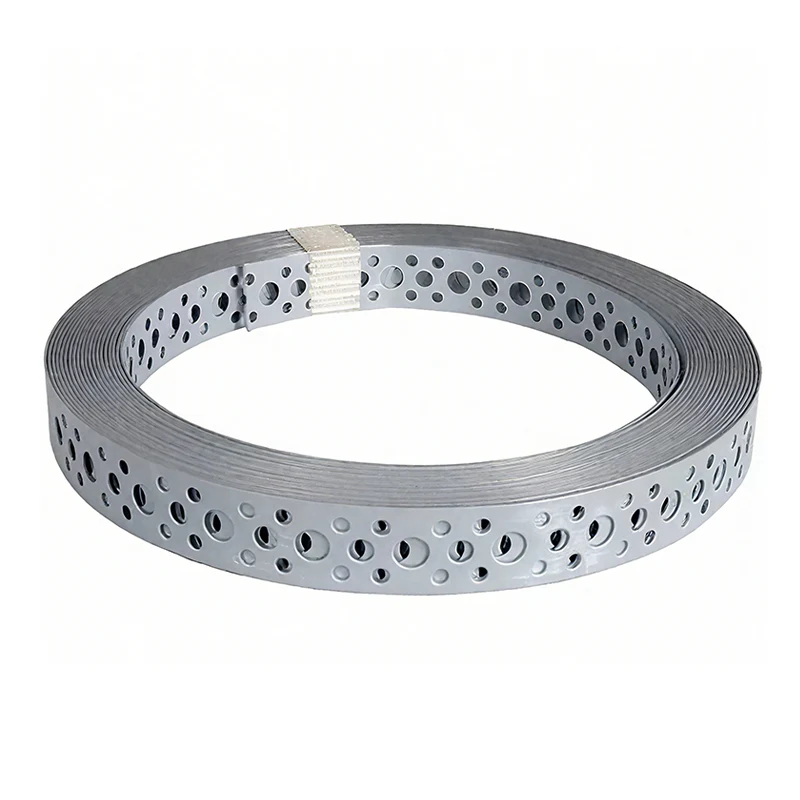
For Timber Connector Reinforced Strap Ties, these factors attack the critical intersection points—the nail holes, bend radii, and edge cuts where stress concentrates and coating coverage is thinnest.
Coating Options Compared
| Protection Type | Expected Lifespan (Coastal) | Cost Factor | Best Application |
|---|---|---|---|
| Hot-Dip Galvanized (G185) | 8–12 years | Low | Interior dry timber frames |
| Stainless Steel (304) | 15–20 years | Medium | Exposed exterior decks |
| Stainless Steel (316) | 25+ years | High | Direct sea spray zones |
| Polymer-Coated + G185 | 12–18 years | Medium-High | High-humidity roof connections |
| Zinc-Aluminum Alloy | 10–15 years | Medium | Covered but ventilated spaces |
Shengsen recommends 316 stainless steel for any Timber Connector Reinforced Strap Tie installed within 1 kilometre of a coastline, especially if the connection is not shielded by a roof overhang. For projects with budget constraints, hot-dip galvanized with a supplementary field-applied epoxy topcoat offers a pragmatic compromise—provided that field coating does not clog the connector’s pre-punched nail slots.
Why Passive Protection Is Not Enough
Many specifiers assume that a thick galvanized layer alone provides permanent defence. Field inspections from Shengsen’s coastal case studies tell a different story. In a 2023 Queensland project, G185-coated Timber Connector Reinforced Strap Ties showed red rust within 18 months on south-facing elevations. The root cause was not coating quality—it was crevice corrosion at the timber interface, where trapped moisture remained in contact with the steel for extended periods.
Active protection strategies that actually work include:
-
Sacrificial anodes (zinc strips) bolted adjacent to critical connectors
-
Vapour-permeable membranes between timber and metal to reduce direct moisture contact
-
Regular inspection schedules (every 6 months) with torque-checking of bolted connections
Three Critical Design Rules for Coastal Projects
-
Never mix metals – Copper-based wood preservatives react violently with galvanized steel. Specify alkaline copper quat (ACQ)-compatible coatings or use stainless steel Timber Connector Reinforced Strap Ties exclusively.
-
Elevate connections – Maintain a 10 mm air gap between the strap tie and any horizontal timber surface to allow drainage and airflow.
-
Oversize holes cautiously – While oversized holes ease installation, they also expose raw steel edges. Shengsen’s precision tooling creates clean burr-free perforations that accept full coating coverage—an engineering detail that extends service life by up to 30%.
Frequently Asked Questions
Q1: Can I apply a rust-inhibiting paint over an already installed galvanized Timber Connector Reinforced Strap Tie in a coastal area?
A1: Yes, but surface preparation is critical. You must remove all loose rust, salts, and grease using a wire brush followed by a solvent wipe (acetone or xylene). Apply a zinc-rich primer (minimum 85% zinc dust by weight) within two hours of cleaning, then topcoat with a moisture-cured urethane. Avoid alkyd-based paints—they saponify in alkaline galvanized surfaces and peel within months. For existing connectors that show pitting deeper than 0.5 mm, replacement with a Shengsen 316 stainless steel unit is the only code-compliant solution per AS/NZS 4600.
Q2: How do I know if my Timber Connector Reinforced Strap Ties are already corroding beyond safe limits?
A2: Perform the “tap test”—strike the connector lightly with a 200 g hammer. A dull thud indicates delamination or internal rust expansion. Visually, look for white powdery deposits (zinc oxide) that progress to reddish-brown flakes. Measure the remaining thickness at the bend radius using an ultrasonic gauge; if the reduction exceeds 20% of the original nominal thickness (e.g., from 2.0 mm to 1.6 mm), the connector’s published load tables become invalid. Shengsen offers a free field-assessment checklist for professionals—download it from our technical library.
Q3: Are there any codes that mandate corrosion protection specifically for Timber Connector Reinforced Strap Ties in coastal zones?
A3: Yes. The International Building Code (IBC 2024) references ASTM A653 for galvanized coatings, but Section 2304.9.5 explicitly requires additional corrosion protection when the mean annual chloride deposition exceeds 200 mg/m²/day. In the US, this applies to most coastal counties from Florida to Maine. In Australia, AS 1684.2 mandates that all metal connectors within 1 km of a surf coast must be either hot-dip galvanized to AS 4680 with a minimum coating mass of 600 g/m², or manufactured from grade 316 stainless steel. Always consult your local building surveyor—Shengsen’s product certifications include compliance reports for all major codes, available upon request.
The Economic Case for Upfront Protection
The cost premium for 316 stainless steel over G185 galvanized is roughly 2.5× per unit. However, when you factor in labour for replacement (scaffolding, timber disassembly, re-nailing), the total lifecycle cost of galvanized connectors in a coastal hotel balcony project often exceeds stainless steel by 40% within 15 years. Shengsen engineers have documented multiple retrofit projects where corrosion-related failures led to insurance claims and litigation. Investing in the correct Timber Connector Reinforced Strap Tie from the outset is not an expense—it is a risk-transfer mechanism that pays for itself in avoided maintenance.
Final Recommendation
For any new coastal construction:
-
Specify 316 stainless steel for all exposed connections.
-
Use G185 with polymer topcoat for protected interior connections.
-
Mandate third-party coating thickness verification on delivery.
-
Include annual inspection as a contractual requirement.
Shengsen supplies both standard and custom-length Timber Connector Reinforced Strap Ties with full traceable mill certificates. Our coastal-grade products undergo 1,000-hour salt-spray testing (ASTM B117) before release.
Ready to specify the right corrosion protection for your next seaside project? Contact our structural support team directly with your project drawings and exposure zone data. We respond to all technical inquiries within 4 business hours and provide free load-calculation verification for any Timber Connector Reinforced Strap Tie selection. Email us at [your-email] or call our engineering hotline—let Shengsen help you build connections that outlast the salt spray.