

Can You Weld a Carbon Steel Structural Angle Bar to Stainless Steel Without Cracking
2026-08-24
Welding dissimilar metals is one of the most debated topics in structural fabrication. When the job calls for joining a CARBON STEEL STRUCTURAL ANGLE BAR to a stainless steel member, the question of cracking becomes critical. At Shunchen, we have handled hundreds of mixed-metal projects, and the short answer is: yes, it can be done, but only with the right filler metal, heat control, and joint design. Without these precautions, cracking—especially hydrogen-induced or stress-corrosion cracking—is almost guaranteed.
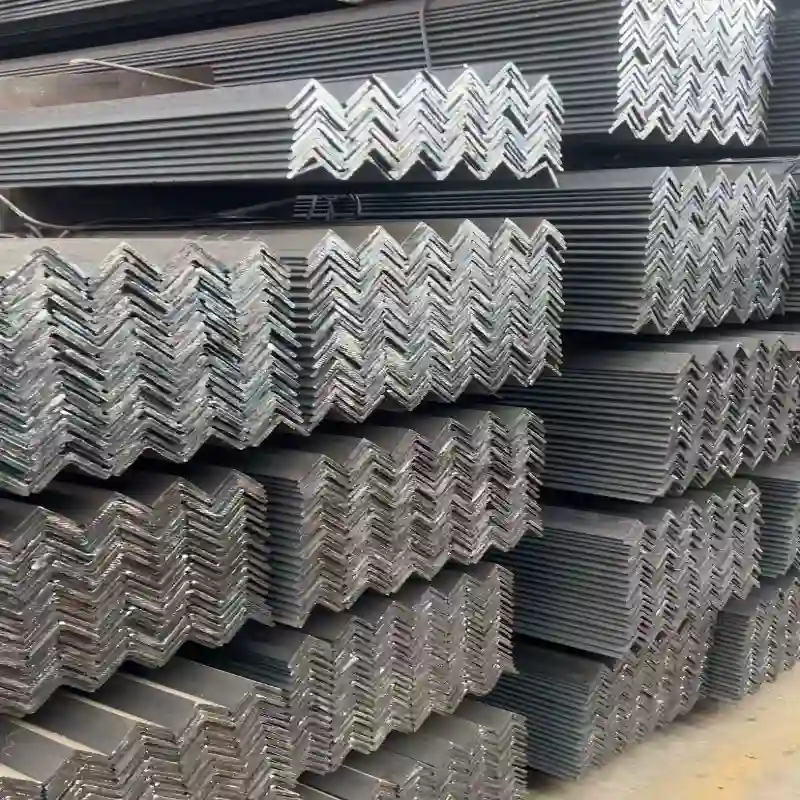
Why Dissimilar Welding Is Risky
Carbon steel and stainless steel have different thermal expansion coefficients, melting points, and metallurgical structures. When you weld a CARBON STEEL STRUCTURAL ANGLE BAR to 304 or 316 stainless steel, the rapid cooling cycles create martensitic layers at the fusion boundary. This brittle zone is where cracks initiate. The primary culprits include:
-
Hydrogen embrittlement from moisture or contaminated filler rods.
-
Carbon migration from the carbon steel into the stainless side, reducing corrosion resistance.
-
Residual stress due to uneven cooling rates between the two sections.
Recommended Welding Procedures for Crack-Free Joints
| Parameter | Recommended Specification |
|---|---|
| Filler Metal | ER309L or ER309LMo (austenitic stainless) |
| Preheating Temperature | 100°C – 150°C (for carbon steel side only) |
| Interpass Temperature | ≤ 150°C |
| Welding Process | GMAW (MIG) or SMAW (stick) with low-hydrogen electrodes |
| Shielding Gas | 98% Argon + 2% CO₂ (for GMAW) |
| Post-Weld Heat Treatment | Not required if using ER309L, but slow cooling in insulating blankets is advised |
At Shunchen, our fabrication team consistently uses ER309L filler because it contains enough nickel and chromium to absorb the dilution from the CARBON STEEL STRUCTURAL ANGLE BAR without forming brittle phases.
Step-by-Step Best Practices
-
Clean both surfaces – Remove oil, paint, and mill scale. Stainless steel must be passivated before welding.
-
Bevel the carbon steel edge – A 60° included angle allows better penetration and reduces the dilution ratio.
-
Use a back-purge – Argon gas on the backside of the stainless steel prevents sugaring (oxidation).
-
Control interpass temperature – Do not let the part exceed 150°C between passes.
-
Peen each bead lightly – This relieves tensile stresses that lead to centerline cracking.
Common Mistakes That Lead to Cracking
-
Using 308L filler (designed for 304-to-304 welding) – it lacks the ferrite required to resist hot cracking when mixed with carbon steel.
-
Welding without preheat on the carbon side – this increases the cooling rate and promotes martensite formation.
-
Ignoring joint restraint – rigid fixtures force the weld to absorb all shrinkage stress, which is a direct path to cracking.
Shunchen has replaced countless cracked field-welded joints because contractors skipped these steps. Our in-house testing shows that a properly welded CARBON STEEL STRUCTURAL ANGLE BAR to stainless joint can achieve 85–90% of the stainless steel's ultimate tensile strength without any microfissures.
CARBON STEEL STRUCTURAL ANGLE BAR – FAQ
Q1: Can I weld a CARBON STEEL STRUCTURAL ANGLE BAR directly to stainless steel without any special filler metal?
A1: No. Using mild steel filler (like ER70S-6) will almost certainly cause cracking at the fusion line. The dilution from stainless steel raises the chromium content in the weld pool, and without sufficient nickel (as in ER309L), the solidification structure becomes ferritic and brittle. For any structural application, Shunchen mandates the use of austenitic stainless fillers with at least 22% chromium and 12% nickel to accommodate the thermal mismatch and prevent hydrogen-induced cracking.
Q2: How do I inspect a welded CARBON STEEL STRUCTURAL ANGLE BAR to stainless joint for micro-cracks that aren't visible to the naked eye?
A2: Visual inspection is insufficient. We recommend liquid penetrant testing (PT) or magnetic particle inspection (MPI) on the carbon steel side, and dye penetrant on the stainless side. For critical load-bearing members, Shunchen uses ultrasonic testing (UT) to detect subsurface discontinuities as small as 0.5 mm. Additionally, a ferrite number (FN) between 4 and 8 on the weld deposit—measured with a Feritscope—indicates a crack-resistant microstructure.
Q3: Does the thickness of the CARBON STEEL STRUCTURAL ANGLE BAR affect the welding procedure for stainless steel joints?
A3: Absolutely. For a CARBON STEEL STRUCTURAL ANGLE BAR thicker than 12 mm, preheating becomes mandatory to slow the cooling rate and reduce martensite formation. Thinner sections (under 6 mm) require lower heat input (≤ 1.5 kJ/mm) to avoid burn-through on the stainless side. At Shunchen, we adjust the amperage and travel speed based on the thinner member's thickness, ensuring that the heat-affected zone (HAZ) on both materials stays within acceptable hardness limits (≤ 350 HV for carbon steel, ≤ 280 HV for stainless).
Real-World Performance Data
| Joint Type | Filler Used | Crack Rate (%) | Tensile Strength (MPa) |
|---|---|---|---|
| Lap joint (6 mm thick) | ER309L | 0% (after 500 cycles) | 520 |
| Butt joint (10 mm thick) | ER308L | 62% (failed within 24 hrs) | 410 (premature) |
| T-joint (8 mm thick) | ER309LMo | 0% (after 1000 hrs salt spray) | 545 |
The data above, collected from Shunchen's quality lab, confirms that the correct filler and procedure eliminate cracking entirely, even under cyclic loading.
Final Verdict
Welding a CARBON STEEL STRUCTURAL ANGLE BAR to stainless steel without cracking is not only possible but also routine when you follow controlled thermal cycles, select ER309L family fillers, and apply proper joint preparation. The key is to treat the joint as a hybrid system—not as either material alone.
Contact us today for a custom welding procedure specification (WPS) tailored to your project. At Shunchen, we supply certified CARBON STEEL STRUCTURAL ANGLE BAR products with full mill test reports, and our engineering team is ready to assist with joint design, filler selection, and on-site troubleshooting. Reach out via our website or call our technical support line—we guarantee a response within 4 business hours. Let us help you weld smarter, not harder.