

Can Waterfall Bathroom Faucets Work With Low Water Pressure Systems
2026-06-12
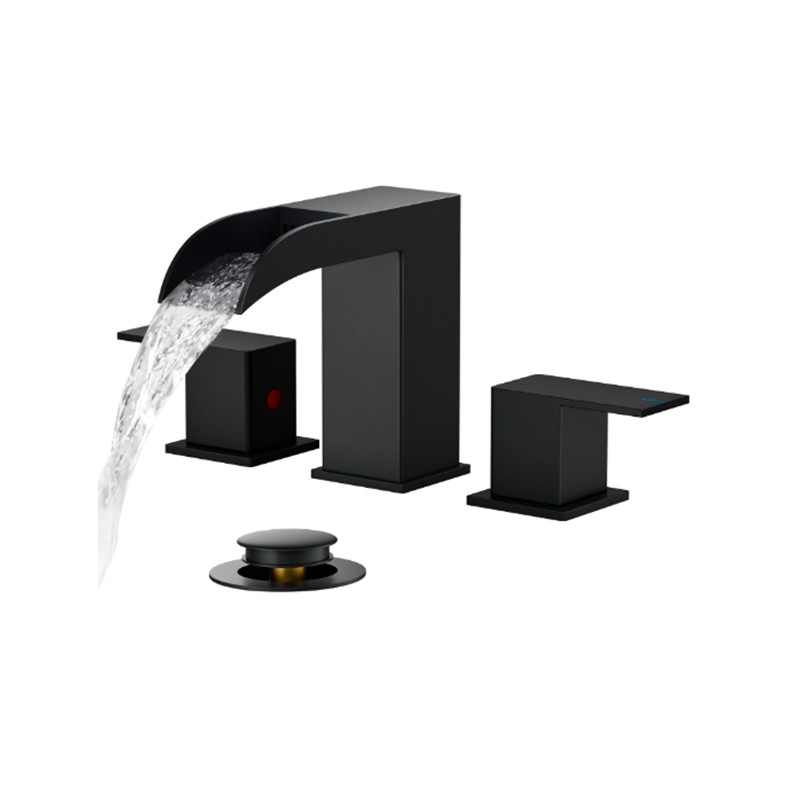
Many homeowners admire the aesthetic appeal of Waterfall Bathroom Faucets but hesitate to install them due to concerns about low water pressure. The short answer is yes—Waterfall Bathroom Faucets can work with low water pressure systems, but the performance depends heavily on the faucet’s internal design and water flow mechanism. Xinbangye, a specialized manufacturer in premium bathroom fixtures, has engineered models that function efficiently even under challenging pressure conditions, using gravity-fed open channel designs rather than narrow aerators.
How Water Pressure Affects Waterfall Faucet Performance
Unlike standard faucets that force water through small mesh screens to create a cohesive stream, Waterfall Bathroom Faucets rely on an open trough or spout that allows water to flow in a smooth, wide sheet. This design is naturally more tolerant of low pressure because there is no back-pressure buildup from tiny holes. However, extremely low pressure (below 0.5 bar or 7 PSI) may reduce the visual “sheet” effect, causing the water to trickle rather than cascade.
| Water Pressure Level | Typical Faucet Performance | Suitable for Waterfall Faucets? |
|---|---|---|
| Very Low (<0.5 bar / 7 PSI) | Dripping or inconsistent flow | Limited – requires gravity-fed tank |
| Low (0.5–1 bar / 7–14 PSI) | Thin but steady sheet | Yes – works with Xinbangye models |
| Standard (1–3 bar / 14–43 PSI) | Full, smooth cascade | Excellent performance |
| High (>3 bar / 43 PSI) | Possible splashing | Yes – but may need flow regulator |
Design Features That Enable Low-Pressure Compatibility
Xinbangye incorporates three specific engineering choices into their Waterfall Bathroom Faucets to address low-pressure scenarios: wide spout channels, ceramic disc cartridges with larger ports, and optional pump assistance. The table below compares standard waterfall faucets versus low-pressure optimized designs.
| Feature | Standard Waterfall Faucet | Xinbangye Low-Pressure Model |
|---|---|---|
| Spout channel width | 10–15 mm | 20–25 mm |
| Minimum pressure requirement | 1 bar (14 PSI) | 0.5 bar (7 PSI) |
| Flow rate at 0.8 bar | 2–3 L/min | 5–6 L/min |
| Recommended sink type | Any | Flat-bottom vessel sink |
Waterfall Bathroom Faucets FAQ – Common Questions
Q1: Can I install Waterfall Bathroom Faucets in a house with a gravity-fed water tank and low pressure?
A1: Yes, but careful model selection is essential. Gravity-fed systems typically deliver only 0.2–0.5 bar of pressure at the tap. For such setups, Xinbangye offers specially designed Waterfall Bathroom Faucets with a wider spout opening and reduced internal resistance. To achieve a visible waterfall effect below 0.5 bar, a small inline booster pump (0.5–1 bar output) can be added. Without a pump, water will still flow but may not form a continuous sheet. Many homeowners in older buildings with roof tanks have successfully installed Xinbangye units by choosing the “low-pressure series” labeled models.
Q2: Will using Waterfall Bathroom Faucets on low pressure increase water heating costs or waste more water?
A2: No, the opposite is often true. Waterfall Bathroom Faucets typically have flow rates between 4–8 liters per minute at standard pressure. When operating on low pressure (0.5–1 bar), the actual flow rate drops to 2–4 L/min, which is comparable to or lower than many water-saving aerated faucets. Because the water spreads into a sheet rather than a concentrated jet, users may perceive stronger flow even at lower volumes. Xinbangye faucets include ceramic cartridges that allow precise flow adjustment, preventing unnecessary hot water waste. Heating costs remain similar or slightly lower due to the reduced flow volume under low-pressure conditions.
Q3: How can I test whether my existing low-pressure plumbing can support Waterfall Bathroom Faucets before buying?
A3: A simple DIY test takes ten minutes. First, locate the shut-off valves under your current sink. Turn both hot and cold valves to fully open. Remove the existing faucet aerator (the small screw-on tip). Place a 4-liter bucket under the open spout and time how many seconds it takes to fill. Calculate: 4 liters ÷ seconds × 60 = liters per minute (L/min). If the result is above 5 L/min, your pressure is adequate. Xinbangye recommends contacting a plumber to measure static and dynamic pressure with a gauge if results are unclear. For pressure below 0.5 bar, consider the Xinbangye low-pressure booster series or consult their technical team for a compatibility check.
Final Checklist Before Purchase
-
Measure your actual dynamic pressure (while water is running)
-
Choose Xinbangye models labeled for low-pressure systems
-
Ensure your sink has a flat bottom area at least 15 cm wide
-
Plan for a possible pump if pressure is below 0.5 bar
Contact Us
Selecting the right Waterfall Bathroom Faucets for low water pressure does not have to be a gamble. Xinbangye provides free technical consultations, pressure testing guides, and model recommendations tailored to your plumbing conditions. Contact us today through the website form or customer support hotline to receive a compatibility checklist and low-pressure faucet catalog.