
Can Steel Investment Casting Achieve the Intricate Designs Required for High-End Furniture
2026-03-19
The pursuit of distinctive aesthetics in premium interiors has pushed furniture engineers to question whether manufacturing techniques can keep pace with artistic ambition. When discussing Steel Investment Casting Furniture Hardware, the conversation inevitably turns to the balance between structural integrity and ornamental complexity. At Losier, we have spent decades refining this balance, proving that the precision of investment casting not only meets but often exceeds the expectations of contemporary furniture designers.
Understanding the Precision of Investment Casting
Investment casting, often referred to as the lost-wax process, originates from ancient artistry but has evolved into a sophisticated industrial method. Its core advantage lies in the ability to replicate intricate wax patterns into solid metal components with exceptional fidelity.
| Feature | Capability of Steel Investment Casting |
|---|---|
| Minimum Wall Thickness | As low as 1.5 mm, enabling lightweight yet strong hardware |
| Surface Detail Reproduction | Captures textures, engravings, and organic shapes down to 0.1 mm |
| Dimensional Tolerance | Typically ±0.13 mm, ensuring seamless assembly |
| Alloy Versatility | Compatible with stainless steel, carbon steel, and specialty alloys |
This table demonstrates why Steel Investment Casting Furniture Hardware is increasingly specified for collections that demand both visual appeal and rigorous performance.
Achieving the "Impossible" in Furniture Design
High-end furniture often features elements that appear impossible to manufacture as a single piece. Curved armrests with integrated mounting points, backplate connectors with flowing organic lines, and decorative finials with undercut details are all achievable through investment casting.
Key Design Capabilities Delivered by Losier
-
Undercuts and Internal Cavities: Wax tooling allows for cores that create hollow sections, reducing weight while maintaining strength.
-
Textured Surfaces: From simulated wood grain to geometric patterns, the ceramic shell captures every nuance.
-
Brand Integration: Logos and serial numbers can be cast directly into the hardware, eliminating secondary operations.
-
Zero Draft Angles: Unlike forging or stamping, investment casting accommodates vertical walls, crucial for modern minimalist designs.
Through advanced tooling strategies and metallurgical expertise, Losier transforms complex CAD models into tangible hardware that assembles flawlessly.
Why Material Selection Matters
The choice of material significantly impacts the final outcome. While decorative appeal is paramount for high-end furniture, the hardware must also resist corrosion, withstand daily use, and maintain its finish over decades.
Steel Investment Casting Furniture Hardware commonly utilizes:
-
304 Stainless Steel: Offers excellent corrosion resistance and a bright, consistent finish ideal for polished or brushed surfaces.
-
316 Stainless Steel: Specified for marine or outdoor furniture due to its superior resistance to chlorides and harsh environments.
-
Carbon Steel (Low Alloy): Selected for applications requiring subsequent plating or when specific mechanical properties like wear resistance are needed.
Losier maintains strict metallurgical controls throughout the melting and pouring process to ensure every component meets the specified grade requirements.
Surface Finish and Post-Processing
One concern designers raise is whether cast surfaces require extensive finishing. Modern investment casting, particularly with Losier's process controls, produces "as-cast" surfaces that significantly reduce grinding and polishing time.
| Finish Type | Typical Application | Process Involved |
|---|---|---|
| As-Cast (Matte) | Industrial-chic designs, hidden structural parts | Minimal tumbling |
| Brushed / Satin | Contemporary furniture, visible hinges and pulls | Mechanical abrasion with belts or wheels |
| Mirror Polished | Luxury casegoods, decorative accents | Progressive polishing compounds |
| PVD Coated | High-wear areas, colored finishes | Physical vapor deposition over polished base |
The ability to start with a near-net shape means that achieving these high-end finishes is both practical and cost-effective.
Integrating Hardware into the Furniture Narrative
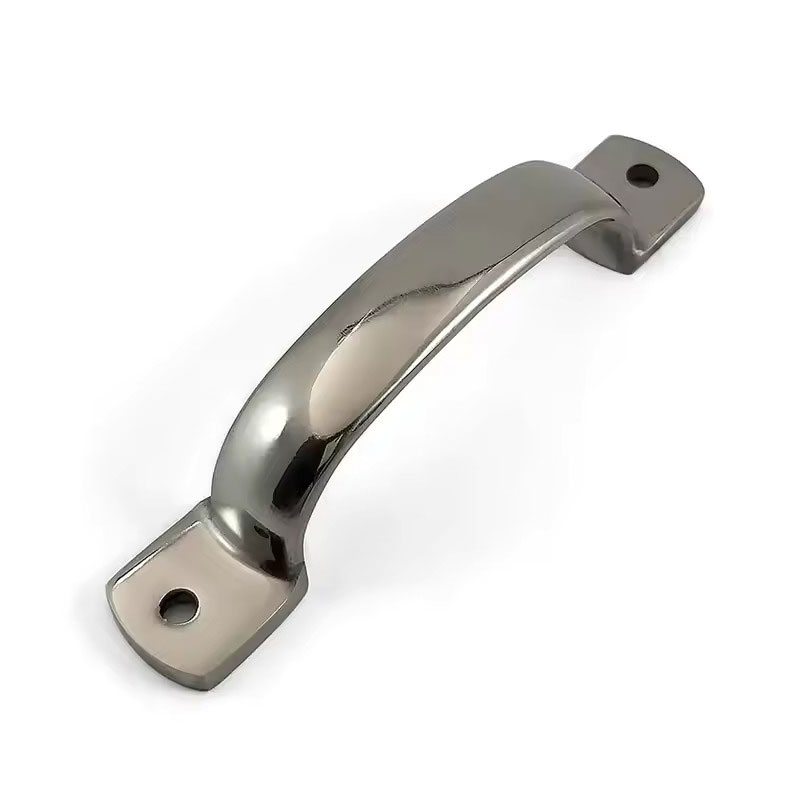
Hardware is no longer an afterthought in furniture design; it is a defining element. Pulls, hinges, corner brackets, and leg connectors crafted through Steel Investment Casting Furniture Hardware methods allow designers to extend their visual language consistently across a piece.
Whether the goal is to evoke the fluidity of Art Nouveau, the geometry of Bauhaus, or the clean lines of Scandinavian modernism, investment casting provides the necessary flexibility. Losier collaborates with design teams during the early stages to optimize components for the casting process, ensuring that the final hardware is both beautiful and manufacturable at scale.
Frequently Asked Questions
What level of detail can truly be captured in steel investment casting for furniture components?
The process excels at reproducing fine details. Using advanced wax injection dies and precision ceramic shells, features such as sharp corners, small radii, textured surfaces, and intricate lettering are captured with high fidelity. For furniture hardware, this means decorative motifs, manufacturer logos, and even fine knurling can be incorporated directly into the cast part without requiring secondary machining. The limiting factor is typically the ability to remove the ceramic core from internal cavities, but with proper design for manufacturability, even complex internal geometries are achievable.
How does the cost of investment casting for intricate furniture hardware compare to other methods like machining or stamping?
For simple shapes in high volume, stamping may have a lower per-piece cost. However, when the design involves complexity, undercuts, or three-dimensional contours, investment casting becomes significantly more economical. Machining such features from solid bar stock would be prohibitively expensive and wasteful. With investment casting, the part is formed to near-net shape, reducing material waste and eliminating multiple machining operations. The initial tooling investment is spread across the production run, making it the most cost-effective solution for medium to high volumes of intricate Steel Investment Casting Furniture Hardware.
Are there limitations on the size of furniture hardware produced through steel investment casting?
While investment casting is renowned for small, precision components, it is also highly capable of producing larger furniture parts. Components such as full chair armrests, large decorative backplates, and structural leg brackets are routinely manufactured using this process. The primary considerations are the weight of the casting for handling and the capacity of the ceramic shell to withstand the ferrostatic pressure of the molten steel. Losier has experience scaling the process to accommodate a wide range of part sizes, ensuring structural soundness and dimensional accuracy regardless of the component's dimensions.
Elevate Your Furniture Collection with Losier
The question is no longer whether steel investment casting can achieve intricate designs, but rather how quickly you can bring those designs to market. With our engineering support, metallurgical expertise, and commitment to quality, Losier is your partner in creating distinctive Steel Investment Casting Furniture Hardware that defines collections and delights end-users.
From concept development through to finished, packaged components, we provide a seamless path from your sketch to the showroom floor. Do not let manufacturing limitations restrict your creative vision.
Contact Us today to discuss your next project with our engineering team and discover the possibilities of precision-crafted hardware.