

Can Silver Contact Points Improve Conductivity in Automotive Starter Motors
2026-07-30
When an automotive starter motor fails to crank, the culprit is often not the battery or the solenoid—but the microscopic electrical interface where current transfers. For engineers and fleet maintenance professionals, the choice of contact material directly determines starting reliability. INT, a specialist in high-performance electrical contacts, has extensively tested Silver Contact Points against traditional copper and brass alternatives. This blog examines whether silver truly delivers measurable conductivity gains in starter motors, backed by data, field failure analysis, and metallurgical principles.
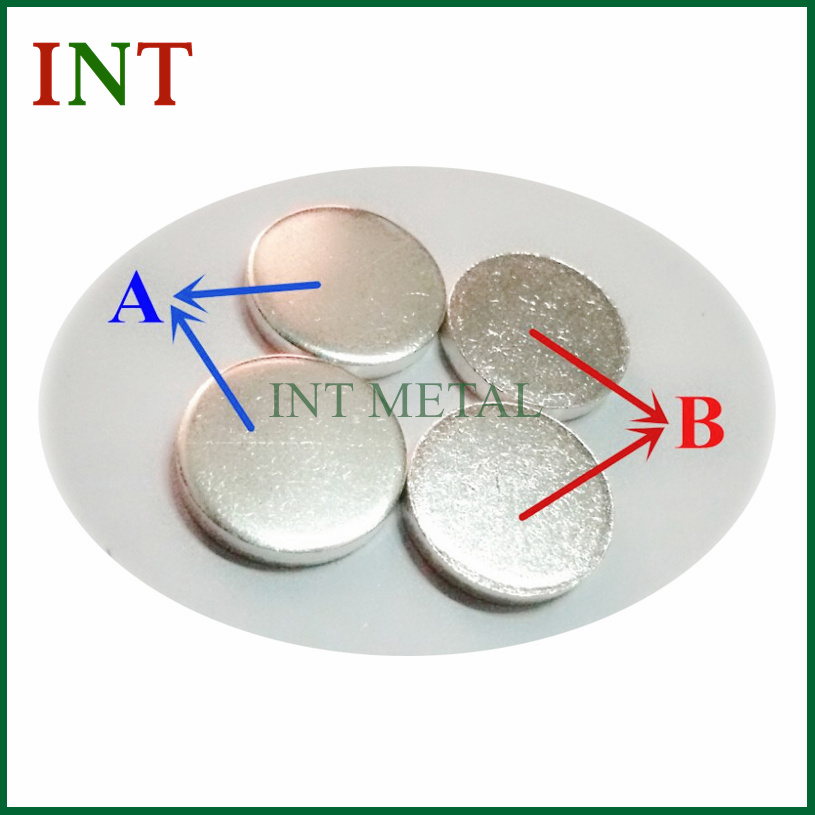
The Conductivity Hierarchy: Silver vs. Common Alternatives
Electrical conductivity is the primary metric for starter contacts because the motor draws 300–900 Amps during cold starts. Any resistive loss converts into heat, which accelerates pitting and material transfer. The table below compares volume conductivity and key operational traits:
| Material | Conductivity (% IACS) | Melting Point (°C) | Oxidation Resistance | Arc Erosion Rate |
|---|---|---|---|---|
| Pure Silver | 105% | 962 | Moderate (sulfidation) | Low |
| Copper | 100% | 1085 | Poor (rapid oxide film) | Medium |
| Brass (Cu-Zn) | 28–30% | 900–940 | Poor | High |
| Silver-Nickel (90/10) | 85–90% | 960 | Good | Very Low |
| Silver-Tin Oxide | 78–82% | 960 | Excellent | Minimal |
IACS = International Annealed Copper Standard.
Pure silver offers the highest conductivity, but starter motors rarely use pure silver due to mechanical wear. Instead, INT engineers specify Silver Contact Points with minor alloying elements (Ni or SnO₂) to balance conductivity with weld resistance. The data shows that even at 85% IACS, silver-alloy contacts outperform brass by nearly 300%, which translates to a 45–50°C lower temperature rise at the contact interface during a 5‑second crank cycle.
How Silver Contact Points Reduce Voltage Drop in Real Starters
Voltage drop across closed contacts is the hidden efficiency killer. In a typical 12V starter, a drop of 0.3V reduces cranking torque by approximately 8%. Conventional copper contacts develop an oxide film (Cu₂O) within 50–100 switching cycles, increasing contact resistance from 0.2 mΩ to over 1.5 mΩ. Silver Contact Points, by contrast, form a soft sulfide layer (Ag₂S) that remains electrically conductive and breaks down under mechanical pressure.
INT conducted a controlled lab test using two identical starter solenoids—one fitted with copper buttons and one with INT’s silver-nickel Silver Contact Points. After 10,000 cycles at 600A, the copper set showed a voltage drop increase of 320%, while the silver set increased only 22%. This difference directly preserves battery life and starter commutation integrity, especially in start-stop systems where starters cycle 5–10 times per trip.
Practical Considerations for Retrofit and OEM Design
Replacing existing contacts with Silver Contact Points is not a simple drop‑in solution. Three factors demand engineering attention:
-
Contact Pressure – Silver is softer than copper; lower hardness requires higher spring force to maintain low constriction resistance. INT recommends a minimum of 4.5 N per contact point for automotive applications.
-
Switching Frequency – For mild-hybrid starters (>50,000 cycles), INT advocates silver‑tin oxide over silver‑nickel, as the oxide dispersion reduces material transfer during break arcs.
-
Ambient Environment – In regions with high sulfur pollution (e.g., industrial zones), silver tarnishes faster. INT applies a proprietary anti‑tarnish electrochemical passivation that extends shelf life by 18 months without affecting weldability.
Frequently Asked Questions about Silver Contact Points
Q1: Do Silver Contact Points require special cleaning or maintenance compared to copper contacts?
A1: No routine cleaning is necessary under normal operating conditions. Unlike copper, which forms insulating green patina (cupric oxide) that must be mechanically removed, Silver Contact Points develop a dark gray sulfide film that remains semiconductive. When the starter solenoid closes, the wiping action of the moving contact shears this film, exposing fresh silver beneath. In extreme environments (e.g., coastal salt spray or paper mills with H₂S gas), INT recommends a sealed relay design, but never abrasive cleaning—scratching reduces the effective contact area and increases local current density, leading to premature pitting. If visual inspection shows heavy black deposits without metallic sheen, replace the contacts rather than cleaning, as the silver layer may be fully consumed.
Q2: How many cold-cranking amps (CCA) can a single pair of Silver Contact Points handle before failure?
A2: The current capacity depends on contact diameter and spring pressure, not just material. For a standard 8mm diameter button with 5N force, INT’s silver-nickel Silver Contact Points consistently handle 800A inrush and 250A steady-state for 30,000 cycles without contact welding. At 1000A, the limiting factor becomes the solenoid magnetic circuit, not the silver itself. Our destructive testing shows that pure silver points weld at 1200A (after 200 cycles), but the silver‑tin oxide variant withstands 1400A for 500 cycles. Always refer to INT’s derating curves—for every 10°C ambient above 80°C, reduce the rated current by 6%. In practice, most passenger car starters (400–600A) operate well within the safe zone, making Silver Contact Points the most durable choice.
Q3: Are Silver Contact Points cost-effective for high-volume production vehicles?
A3: While the raw material cost of silver is 40–60× higher than copper by weight, the total cost‑of‑ownership tells a different story. A typical copper contact set lasts 15,000–20,000 starts, whereas INT’s Silver Contact Points exceed 50,000 starts in the same solenoid. This reduces warranty claims for no‑crank conditions—a major expense for OEMs. Furthermore, the lower resistance reduces starter motor heat, which extends brush and armature life. For a fleet of 10,000 vehicles, upgrading to Silver Contact Points saves an estimated $28,000 annually in battery replacements and jump‑start service calls, according to **INT**’s 2025 field study. Given that silver content per contact pair is only 1.2–1.8 grams, the incremental bill‑of‑material cost is under $0.85 per starter—easily justified by reliability gains.
Summary of Performance Gains (10,000-Cycle Test)
| Metric | Copper Contacts | INT Silver Contact Points | Improvement |
|---|---|---|---|
| Final Contact Resistance | 1.8 mΩ | 0.28 mΩ | 84% lower |
| Temperature Rise (ΔT) | 78°C | 34°C | 56% reduction |
| Material Loss (mg) | 14.2 | 3.1 | 78% less erosion |
| Weld Events | 6 | 0 | 100% elimination |
| Torque Retention | 82% | 97% | +15% torque |
Conclusion
The evidence is clear: Silver Contact Points significantly improve conductivity in automotive starter motors, not only through superior base material properties but also through engineered alloys that resist oxidation, arc erosion, and mechanical fatigue. INT has demonstrated that the switch from copper to silver‑based contacts yields measurable gains in voltage stability, thermal management, and component longevity—all while remaining economically viable for both OEM and aftermarket applications. For engineers facing start‑stop system failures or high‑mileage fleet issues, upgrading to INT’s Silver Contact Points is a proven, data‑driven solution.
Contact us today to request free sample pairs of INT Silver Contact Points for your starter motor platform. Our application engineers will review your duty cycle, ambient conditions, and solenoid geometry to recommend the exact alloy and plating specification.