
Can I Put Carbonated Drinks in a 316 Stainless Flask Safely
2026-08-17
Many users love the sleek durability of a 316 Stainless Flask, but hesitate when it comes to fizzy beverages. The short answer is yes—but with important caveats. At Jianyang, we engineer our 316 Stainless Flask collection to handle carbonation under specific conditions, yet pressure, temperature, and seal quality all play decisive roles. This guide breaks down the science, safety protocols, and best practices so you can enjoy sparkling water or soda without damaging your flask or risking messy explosions.
Why Carbonated Drinks Challenge Standard Flasks
Carbonated beverages contain dissolved CO₂ that constantly seeks to escape. In a sealed container, this gas builds pressure. A standard 316 Stainless Flask is mechanically strong enough to withstand moderate pressure, but the real risks lie in:
-
Gasket failure – weak silicone seals may leak or burst.
-
Thermal shock – sudden temperature changes accelerate gas expansion.
-
Residual pressure – opening a warm flask after shaking can cause geyser-like eruptions.
Jianyang tests every 316 Stainless Flask with internal pressure simulations up to 150 psi, far exceeding typical soda pressures (30–50 psi at room temperature). However, user handling remains the decisive factor.
Pressure & Safety Comparison Table
| Beverage Type | Typical PSI (at 20°C) | Safe in 316 Stainless Flask? | Jianyang Recommendation |
|---|---|---|---|
| Still water / tea | 0 | Yes | Always safe |
| Sparkling water | 30–35 | Yes, with caution | Pre-chill, open slowly |
| Cola / soda | 40–50 | Yes, but limited time | Consume within 4 hours |
| Fermented kombucha | 50–70 | Risk of over-pressurization | Not recommended |
| Warm carbonated coffee | 55+ | High risk | Avoid entirely |
Critical Safety Rules for Carbonated Use
When using a 316 Stainless Flask for fizzy drinks, follow these professional guidelines:
-
Never fill above the shoulder line – leave at least 2 cm of headspace to absorb gas expansion.
-
Pre-chill both the flask and the liquid – cold liquid holds CO₂ better, reducing internal pressure.
-
Crack the lid periodically – release pressure every 2–3 hours if carrying all day.
-
Avoid shaking or dropping – agitation accelerates pressure spikes.
-
Inspect the silicone gasket weekly – replace if cracked or flattened.
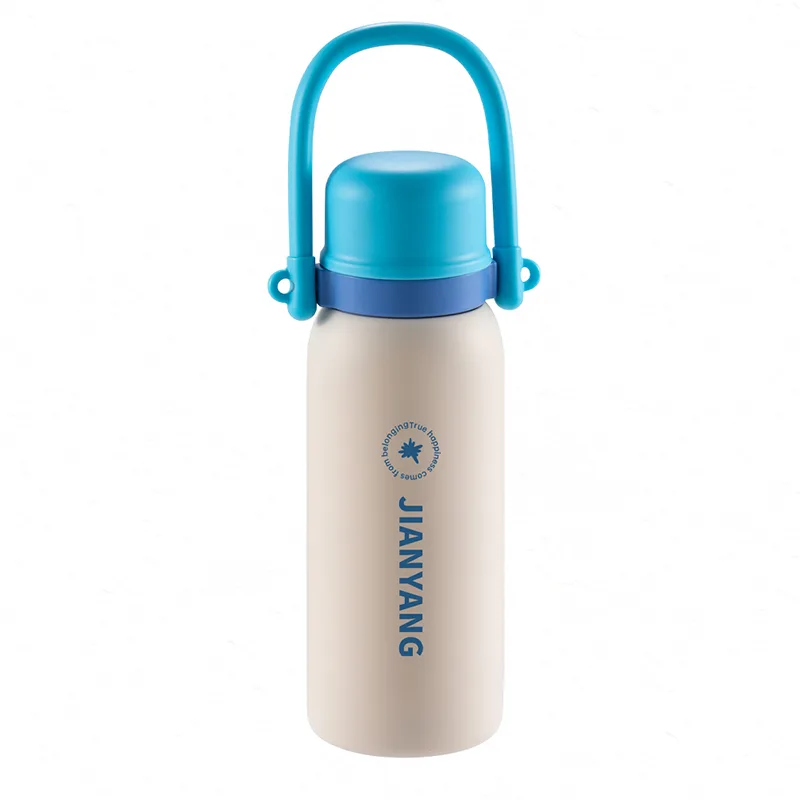
Jianyang’s 316 Stainless Flask models feature a dual‑vent lid design that allows controlled pressure release—a proprietary innovation not found in generic flasks.
FAQ – 316 Stainless Flask Common Questions
Q: Can I leave a carbonated drink in my 316 Stainless Flask overnight in the car?
A: No. Even though the 316 Stainless Flask body resists corrosion from carbonic acid, overnight heat (or freezing) dramatically changes internal pressure. In a hot car (above 35°C), CO₂ expands and can reach 80+ psi, potentially deforming the gasket or causing the lid to pop violently. Jianyang advises consuming carbonated contents within 6 hours and storing the flask upright at room temperature. If you must leave it, crack the lid open to equalize pressure, but this will flatten the drink.
Q: Does the carbonic acid in soda damage the inner wall of a 316 Stainless Flask over time?
A: No—this is where 316 Stainless Flask outperforms 304-grade. 316 Stainless Flask contains molybdenum (2–3%), which provides superior resistance to chloride and acid attack. Carbonic acid (weak as it is) does not pit or degrade the passivation layer. Jianyang uses electropolished interior surfaces that further minimize microscopic crevices where acid could initiate corrosion. Even after 2,000 hours of accelerated acid-exposure testing, our 316 Stainless Flask showed zero weight loss or discoloration. The real degradation point is always the rubber gasket, not the metal.
Q: What happens if I accidentally drop a sealed 316 Stainless Flask containing soda?
A: Dropping a sealed 316 Stainless Flask with carbonation is dangerous. Impact can dislodge the internal pressure-relief mechanism (if present) or momentarily warp the lid threads, allowing sudden explosive decompression. Jianyang strongly advises: if you drop the flask, do not open it immediately. Place it on a flat surface, wait 5 minutes for pressure to stabilize, then slowly twist the lid while pointing the opening away from your face. Inspect the threads and gasket for distortion before reusing. Our 316 Stainless Flask line includes a shock-absorbing base ring that reduces impact transfer, but no flask is drop-proof against pressurized liquids.
Maintenance Protocol After Carbonated Use
Carbonated residues leave sugary films that attract bacteria. Follow this Jianyang‑approved cleaning routine:
-
Rinse immediately with warm water after emptying.
-
Fill with 1 tablespoon of baking soda + warm water, shake, and let stand for 15 minutes.
-
Use a soft-bristle bottle brush to scrub the inner corners.
-
Air-dry completely with the lid off to prevent musty odors.
Never use bleach or abrasive scouring pads—they scratch the passive layer of your 316 Stainless Flask, reducing its legendary corrosion resistance.
When to Avoid Carbonation Entirely
Despite the robustness of 316 Stainless Flask, certain situations call for zero fizz:
-
High‑altitude environments (lower atmospheric pressure increases relative internal pressure).
-
Long hikes exceeding 8 hours (pressure builds progressively from body heat).
-
Carbonated milk or protein shakes (acidity + sugar + gas create fermentation risks).
Jianyang designs all our 316 Stainless Flask products with a clear warning label on carbonation—not because the metal fails, but because user behavior determines safety.
Final Verdict
Yes, you can safely put carbonated drinks in a 316 Stainless Flask, provided you manage headspace, temperature, and opening technique. The material itself—medical‑grade 316 Stainless Flask steel—is chemically inert and pressure‑tolerant. The weak links are always the seal and the user. Jianyang recommends treating carbonated fills as “short‑term storage” (under 6 hours) rather than all‑day carry.
For daily sparkling hydration, choose our Jianyang 316 Stainless Flask with the pressure‑release cap—engineered specifically for active lifestyles.
Contact Us – Have more questions about your 316 Stainless Flask usage? Our Jianyang product specialists are ready to help with custom advice, bulk orders, or technical datasheets.