

Can an Aluminum Alloy Belt Hinge Be Used for Both Industrial and Commercial Applications
2026-11-03
When selecting hardware for conveyor and belt systems, one question comes up frequently: can a single component serve both demanding factory environments and lighter commercial settings? The answer lies in understanding how an Aluminum Alloy Belt Hinge is engineered, and why Ousiming designs its hinge solutions to bridge these two worlds. From packaging lines to food processing plants, the versatility of a well-made Aluminum Alloy Belt Hinge depends on material grade, load rating, and installation method.
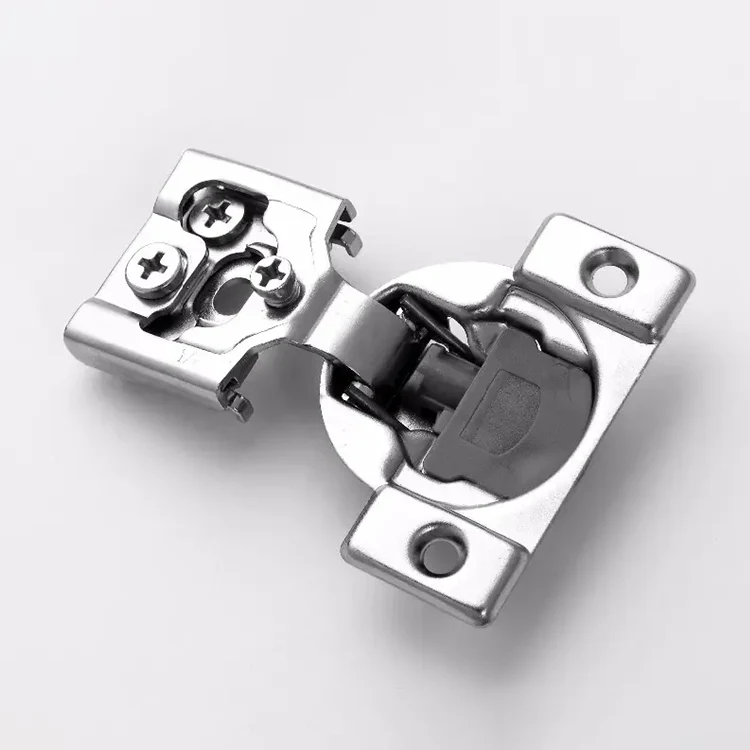
Why Material Choice Matters
Ousiming manufactures Aluminum Alloy Belt Hinges from aerospace-grade 6061-T6 and 5052 alloys. These grades offer an excellent strength-to-weight ratio, natural corrosion resistance, and machinability that supports precise tolerances. For industrial users, this means reduced belt downtime; for commercial users, it means lower maintenance costs and cleaner operation.
| Property | Industrial Requirement | Commercial Requirement | Ousiming Standard |
|---|---|---|---|
| Tensile Strength | ≥ 290 MPa | ≥ 200 MPa | 310 MPa (6061-T6) |
| Corrosion Resistance | Salt spray 500h | Salt spray 200h | 720h tested |
| Operating Temperature | -40°C to 120°C | -20°C to 80°C | -40°C to 150°C |
| Weight per Meter | Lightweight preferred | Easy handling | 0.85 kg/m |
Industrial Applications: Where Performance Is Non-Negotiable
In heavy-duty settings, an Aluminum Alloy Belt Hinge must withstand continuous cycling, abrasive materials, and washdown conditions. Ousiming hinges are used in:
-
Mining and aggregate conveyor belts
-
Automotive assembly line belting
-
Food-grade stainless-adjacent systems
-
High-speed logistics sortation
Key industrial advantages include:
-
Fatigue resistance tested to 1 million flex cycles
-
Chemical compatibility with common industrial lubricants
-
Precision pin retention to prevent belt misalignment
-
Custom hole patterns for OEM belt profiles
Commercial Applications: Where Flexibility and Appearance Count
Commercial environments demand quieter operation, aesthetic finish, and simplified installation. An Aluminum Alloy Belt Hinge from Ousiming suits:
-
Retail checkout conveyor belts
-
Gym and fitness equipment belts
-
Escalator handrail connectors
-
Light-duty packaging and labeling machines
Commercial benefits include:
-
Anodized finishes (clear, black, gold) for visible installations
-
Tool-free pin insertion for rapid replacement
-
Low noise operation below 65 dB
-
Non-magnetic properties for sensitive environments
Design Features That Enable Dual Use
Ousiming engineers each Aluminum Alloy Belt Hinge with interchangeable pin diameters and modular leaf widths. This modularity allows the same hinge family to scale from a 50 mm commercial belt to a 1200 mm industrial conveyor. A comparison of configuration options:
| Feature | Commercial Configuration | Industrial Configuration |
|---|---|---|
| Leaf Width | 25–75 mm | 100–300 mm |
| Pin Diameter | 3–4 mm | 5–8 mm |
| Surface Finish | Anodized | Mill or anodized |
| Load Rating | Up to 150 N/mm | Up to 450 N/mm |
| Installation | Hand tools | Press or hydraulic |
FAQ: Aluminum Alloy Belt Hinge Common Questions
Q: Can an Aluminum Alloy Belt Hinge handle both high-load industrial belts and light commercial belts without modification?
A: Yes, within rated limits. Ousiming offers a modular Aluminum Alloy Belt Hinge platform where the same alloy and hinge geometry are used across load classes. Commercial users select thinner leaves and smaller pins; industrial users select wider leaves and larger pins. The underlying material and corrosion protection remain identical, so switching between applications requires only selecting the correct configuration, not changing the hinge technology.
Q: Is an Aluminum Alloy Belt Hinge suitable for washdown or food-contact commercial environments?
A: It can be, with the right finish. Ousiming supplies anodized and PTFE-coated Aluminum Alloy Belt Hinges that resist moisture and mild cleaning agents. For direct food contact, we recommend the coated variant and confirm compliance with local hygiene standards. The aluminum alloy itself will not rust, but uncoated surfaces can stain in highly alkaline washdown conditions, so finish selection is the critical factor.
Q: How do I choose between an Aluminum Alloy Belt Hinge and a stainless steel hinge for mixed industrial-commercial use?
A: Choose aluminum when weight, corrosion resistance, and cost efficiency matter. Ousiming Aluminum Alloy Belt Hinges weigh roughly one-third of equivalent stainless steel hinges, reducing belt tension and energy consumption. Choose stainless only for extreme chloride or high-temperature (>150°C) exposure. For most dual-use facilities, the aluminum alloy hinge delivers the better balance of performance and total cost of ownership.
Conclusion and Contact
An Aluminum Alloy Belt Hinge can absolutely serve both industrial and commercial applications when the alloy grade, finish, and configuration are matched to the duty cycle. Ousiming provides the modularity, testing data, and finish options to make that dual-use strategy practical. To discuss your specific belt width, load requirement, or finish preference, contact us today for a tailored recommendation and sample evaluation.