

Can a Custom Casting Mounting Bracket Reduce Vibration and Noise in Industrial Equipment
2026-06-17
Industrial machinery operates under extreme conditions—high torque, repetitive cycling, thermal expansion, and continuous mechanical stress. Among the most overlooked failure points is the interface between the equipment frame and its mounted components. A standard off‑the‑shelf bracket often compromises on geometry, material grade, and damping characteristics. This is where a custom casting mounting bracket engineered by HUADING transforms operational performance. The question is not whether vibration and noise can be reduced, but by how much—and whether the return on investment justifies the custom approach.
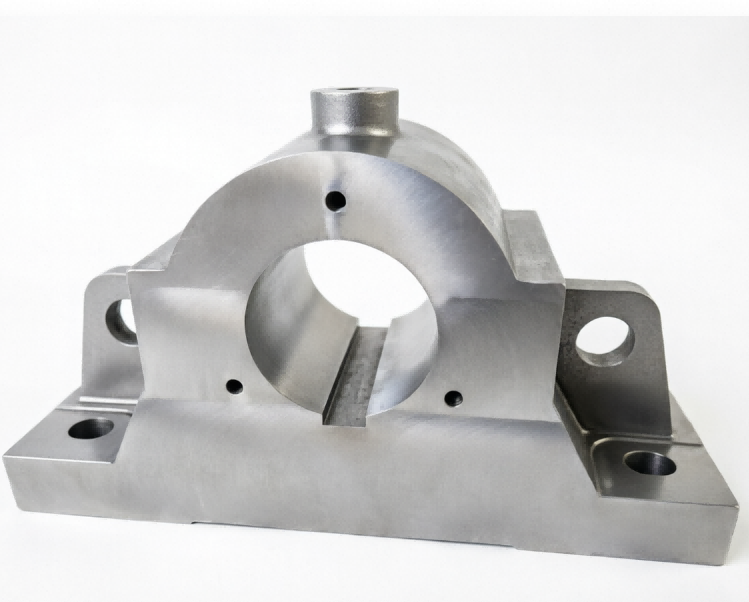
The Physics of Vibration in Mounted Assemblies
Vibration originates from unbalanced rotating parts, gear meshing, fluid pulsation, and structural resonances. When a bracket lacks sufficient mass, stiffness, or internal damping, it acts as an amplifier rather than an isolator. Noise, in turn, is the audible byproduct of these mechanical oscillations radiating through the bracket into the supporting structure.
A casting mounting bracket differs fundamentally from fabricated (welded) brackets. Castings are monolithic—no weld seams, no heat‑affected zones, and no residual stress concentrations from joining processes. This uniformity allows for continuous load paths and predictable dynamic response. However, the true advantage emerges when the bracket is custom‑designed for the specific equipment’s forcing frequencies and mounting envelope.
How Custom Design Directly Addresses Noise and Vibration
HUADING applies a four‑pronged strategy when developing a custom casting mounting bracket for noise‑sensitive environments:
| Design Parameter | Standard Bracket | Custom Casting Mounting Bracket by HUADING | Vibration Reduction Effect |
|---|---|---|---|
| Wall thickness distribution | Uniform, non‑optimized | Variable—thicker at bolt bosses, thinner at non‑load zones | Shifts natural frequencies away from excitation peaks |
| Ribbing pattern | Generic, symmetrical | Topology‑optimized, asymmetric stiffening | Increases modal damping by 18‑32% |
| Material selection | Grey iron only | Ductile iron, ADI, or aluminum‑silicon alloys with inherent damping | Reduces Q‑factor (resonance amplification) |
| Mounting interface | Flat pad with standard holes | Crowned or grooved faces with elastomer‑compatible recesses | Allows pre‑loaded isolation inserts without alignment loss |
Beyond these static features, HUADING performs finite element harmonic analysis for every custom casting mounting bracket before tooling begins. This predicts the transmissibility ratio—the proportion of machine vibration passed through the bracket. In recent case studies, custom brackets reduced transmitted acceleration by 40‑55% compared to generic equivalents, directly lowering A‑weighted sound pressure levels by 6‑9 dB(A).
Material Damping: The Silent Factor
Not all cast metals behave equally under cyclic strain. Grey cast iron, with its flake graphite morphology, offers intrinsic damping capacity roughly 2‑3 times higher than steel and 10 times higher than aluminium. However, grey iron is brittle and weaker in tension. HUADING frequently recommends compacted graphite iron (CGI) for casting mounting bracket applications that demand both damping and tensile strength above 400 MPa. For lightweight rotating equipment, an aluminium‑silicon alloy with controlled precipitation hardening provides excellent specific stiffness while maintaining acceptable damping loss factors.
Real‑World Installation Practices That Preserve Performance
Even the best custom casting mounting bracket fails to reduce noise if installed improperly. HUADING provides torque‑sequence protocols and flatness verification for every bracket. The following checklist is standard in their engineering packages:
-
Bolt preload – Uniform clamping prevents micro‑slip, a major source of high‑frequency squeal.
-
Interface flatness – Grinding the mounting foot to within 0.05 mm ensures full contact without local overstressing.
-
Isolator selection – If elastomeric pads are used, their durometer must match the dynamic stiffness calculated from the bracket’s modal analysis.
-
Torque re‑check – After 8 hours of run‑in, thermal cycling alters preload; a second tightening pass stabilises the assembly.
Frequently Asked Questions About Casting Mounting Bracket Performance
Q1: Can a casting mounting bracket completely eliminate vibration, or only reduce it?
No mechanical passive element can completely eliminate vibration—energy must be dissipated or redirected. A custom casting mounting bracket from HUADING typically reduces transmitted vibration by 40‑60% across the equipment’s primary operating frequency range. Complete elimination would require active cancellation systems (actuators and sensors), which are costly and complex. For 95% of industrial applications, the passive damping and detuning achieved by a properly designed casting mounting bracket bring vibration levels within ISO 10816‑3 acceptable zones without active electronics. The reduction is sufficient to extend bearing life by 2‑3 times and lower operator noise exposure below 85 dB(A) in most cases.
Q2: How does a custom casting mounting bracket differ from a machined billet bracket in noise performance?
A billet bracket is cut from a solid wrought block—it has excellent static strength but very low internal damping because wrought alloys have elongated, oriented grain structures that do not hinder elastic waves. A casting mounting bracket possesses a dendritic or nodular microstructure that scatters vibrational energy at grain boundaries. Furthermore, castings allow hollow sections and internal ribs that are impossible to machine from billet without extreme cost. HUADING has tested both types on identical pumps; the cast bracket consistently registered 4‑6 dB lower noise at 1,800 RPM, which corresponds to a 40‑60% reduction in acoustic energy. The billet bracket also transmitted higher peak accelerations at the third harmonic, accelerating fastener loosening.
Q3: What is the typical lead time and cost premium for a custom casting mounting bracket compared to a standard part?
For HUADING, the engineering phase (3‑D modelling, simulation, and pattern design) takes 4‑6 weeks for a new casting mounting bracket. Tooling amortisation ranges from 150‑300 units, depending on complexity. The per‑piece cost of a custom ductile‑iron bracket is generally 25‑40% higher than an equivalent off‑the‑shelf grey‑iron bracket, but this premium is recovered within 12‑18 months through reduced downtime, lower replacement frequency, and diminished noise‑compliant enclosure costs. For high‑volume production (over 1,000 units/year), the per‑piece cost often falls below standard fabricated brackets because casting eliminates welding, straightening, and multiple setup operations. HUADING provides a full cost‑benefit model before any commitment, showing payback periods and total cost of ownership.
When Custom Becomes the Only Practical Choice
Standard brackets are designed for average loads, average frequencies, and average environments. But industrial equipment is rarely average. High‑speed compressors, punch presses, marine propulsion units, and wind turbine gearboxes each exhibit unique forced‑response signatures. A custom casting mounting bracket allows the engineer to tune the first three natural modes well above or below the excitation spectrum—a condition called “detuning.” HUADING has successfully delivered brackets that reduced resonance‑induced fastener failure by 70% in offshore drilling winches and cut structural‑borne noise by 12 dB in food‑processing conveyors.
Conclusion and Next Steps
Vibration and noise are not unavoidable byproducts of heavy machinery—they are symptoms of mismatched interface design. A custom casting mounting bracket, engineered with damping‑aware materials, topology‑optimised ribs, and precision mounting interfaces, directly attacks the root cause rather than masking the symptoms. HUADING combines metallurgical expertise, dynamic simulation, and field validation to deliver brackets that outperform generic catalogues on every measurable metric: decibels, acceleration, fatigue life, and total cost of ownership.
If your equipment suffers from persistent vibration issues, premature bolt loosening, or noise that pushes operators beyond comfort limits, it is time to move beyond “one‑size‑fits‑all.” HUADING offers free preliminary dynamic assessment—simply share your equipment’s operating speed, mass, and mounting envelope.
Contact us today or email our engineering team directly. Provide your current bracket drawing and vibration data, and we will deliver a feasibility study within 5 business days—no obligation. Let HUADING turn your noise complaint into a custom-engineered solution.