

Can a Carbon Fiber Driven Roller Replace Metal Rollers in Food Processing Lines
2026-07-06
The food processing industry operates under some of the most demanding conditions imaginable. High-pressure washdowns, caustic cleaning agents, extreme temperature fluctuations, and relentless sanitation schedules push every component to its limit. For decades, stainless steel and coated metal rollers have been the default choice. However, a new contender is gaining serious traction: the Carbon Fiber Driven Roller. At TaiHui Roll, we have spent years engineering composite roller solutions, and we are frequently asked whether our Carbon Fiber Driven Roller can truly outperform—and ultimately replace—traditional metal rollers in food processing environments. The short answer is yes, but the decision requires a careful examination of performance, hygiene, cost, and application-specific demands.
The Core Challenges of Metal Rollers in Food Processing
Metal rollers, particularly those made from stainless steel, are heavy, prone to corrosion over time (especially in chloride-rich environments), and thermally conductive, which can cause product adhesion or freezing issues. They also demand significant energy to accelerate and decelerate. While they are durable, their rigidity transfers shock loads directly to bearings and drive systems, increasing maintenance frequency. Furthermore, microscopic surface pitting from chemical cleaners can become bacterial harborage points—a critical food safety risk.
Why a Carbon Fiber Driven Roller Offers a Superior Alternative
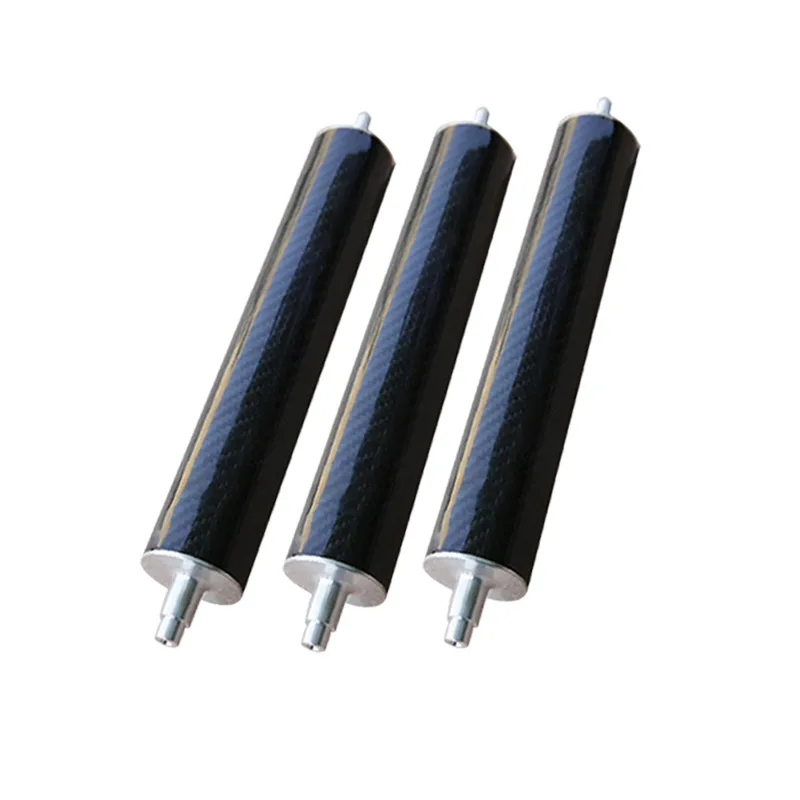
A Carbon Fiber Driven Roller is fundamentally different. Constructed from high-strength carbon fiber composites wrapped around a metallic core or entirely composite, these rollers deliver a unique set of properties that address the weaknesses of metal.
| Performance Metric | Stainless Steel Roller | Carbon Fiber Driven Roller (TaiHui Roll) |
|---|---|---|
| Weight (per meter) | Heavy (≈ 8-10 kg) | Lightweight (≈ 2-3 kg) |
| Energy Consumption | High inertia, more startup torque | Low inertia, up to 40% less energy |
| Corrosion Resistance | Moderate (pitting risk) | Excellent (chemically inert) |
| Thermal Conductivity | High (causes condensation/sticking) | Low (temperature stable surface) |
| Washdown Durability | Good, but crevice corrosion possible | Outstanding, seamless composite surface |
| Bearing Life | Shorter due to shock loads | Extended due to vibration damping |
| Surface Cleanliness | Prone to micro-scratches | Smooth, non-porous, easy-clean |
The Hygiene Factor: A Closer Look
In food processing, hygiene is non-negotiable. The Carbon Fiber Driven Roller offers a seamless, non-porous surface that resists bacterial adhesion. Unlike metal, which can suffer from chlorine-induced stress corrosion cracking, our TaiHui Roll Carbon Fiber Driven Roller maintains its structural integrity even after thousands of caustic CIP (Clean-In-Place) cycles. The reduced weight also means that operators can manually inspect and remove rollers more safely, encouraging more frequent sanitation checks.
Top 3 FAQs About the Carbon Fiber Driven Roller in Food Applications
Q1: Is a Carbon Fiber Driven Roller food-safe and FDA-compliant for direct contact with unpackaged food?
A1: Yes, provided the specific composite resin system is formulated for food contact. TaiHui Roll manufactures Carbon Fiber Driven Roller components using FDA-compliant epoxy resins that are inert and non-toxic. These materials do not leach chemicals into food products, even under high heat or acidic conditions. Additionally, the surface can be finished to an Ra < 0.8 µm mirror polish, which exceeds the FDA requirement for cleanability. However, it is critical to verify that the specific roller model you select includes a food-grade topcoat, as not all carbon fiber rollers are created equal. We always recommend requesting a material certificate for each production batch.
Q2: How does a Carbon Fiber Driven Roller handle extreme temperature shifts during steam cleaning and freezing tunnels?
A2: This is where the Carbon Fiber Driven Roller truly shines. Metal expands and contracts aggressively, which can loosen bearings and alter roller diameters, affecting belt tracking. Carbon fiber composites have a coefficient of thermal expansion (CTE) that is nearly one-fifth that of steel. This means our TaiHui Roll Carbon Fiber Driven Roller maintains its dimensional stability across temperatures ranging from -40°F to +250°F. It does not warp, and the low thermal conductivity prevents surface condensation when moving from cold storage to ambient air, reducing slip hazards and product sticking.
Q3: What is the real-world lifespan of a Carbon Fiber Driven Roller compared to a metal roller in high-wear conveyor applications?
A3: In abrasive environments—such as handling baked goods with sugar dust or salty snacks—a metal roller’s surface can wear down or corrode within 3 to 5 years. A properly engineered Carbon Fiber Driven Roller from TaiHui Roll typically lasts 7 to 10 years under identical conditions. The composite matrix distributes localized stress, preventing crack propagation. Moreover, because the roller is lighter, the bearings experience less radial load, which often extends bearing life by 200% to 300%. While the upfront cost is higher, the total cost of ownership (TCO) over a decade is significantly lower, factoring in reduced downtime, fewer replacements, and energy savings.
Where Metal Still Wins (And Where Carbon Fiber Dominates)
It would be disingenuous to claim that a Carbon Fiber Driven Roller is perfect for every station. In applications involving extreme mechanical impact—such as large meat carcass dropping directly onto a roller—steel's sheer toughness may still be preferred. However, for 80% of food processing conveyors—including baking ovens, cooling tunnels, packaging lines, and fruit sorting—the Carbon Fiber Driven Roller is not just an alternative; it is a superior solution. The combination of corrosion resistance, energy efficiency, and hygiene makes it the future-proof choice.
The Verdict: Replacement Is Not Only Possible—It Is Preferable
To answer the title question directly: Yes, a Carbon Fiber Driven Roller can not only replace metal rollers in most food processing lines, but it also delivers measurable improvements in operational efficiency, food safety, and maintenance costs. The initial investment is higher, but the payback period—driven by energy savings and extended service intervals—is typically under 18 months. At TaiHui Roll, we have witnessed plants reduce their annual roller replacement budgets by over 60% after switching to our composite solutions.
Ready to Upgrade Your Conveyor Line?
Every food processing line has unique variables—belt speed, load cycles, washdown frequency, and product acidity. A generic roller will always compromise somewhere. TaiHui Roll specializes in custom-engineered Carbon Fiber Driven Roller systems tailored to your specific operating parameters. We offer free material compatibility testing and on-site ROI analysis.
Contact us today to request a sample roller or schedule a technical consultation. Let our engineering team show you exactly how a Carbon Fiber Driven Roller can transform your line’s performance, safety, and bottom line. Reach out via our website or call your regional TaiHui Roll representative—we are ready to engineer your next competitive advantage.