

Can 600 MCM-2 2 Conductor Panelboard Lugs Be Used for Copper and Aluminum Mixed Connections
2026-08-14
When designing or upgrading electrical distribution panels, one of the most frequent technical dilemmas involves terminating both copper and aluminum conductors within the same lug body. For contractors and facility engineers, the question is not merely theoretical—it carries real implications for safety, code compliance, and long-term reliability. This post examines whether 600 MCM-2 2 Conductor Panelboard Lugs can safely accommodate mixed metal connections, with practical guidance grounded in NEC rules, metallurgy, and field testing. We also highlight how Kangshuai engineering solutions address this challenge through precision manufacturing and rigorous third-party certifications.
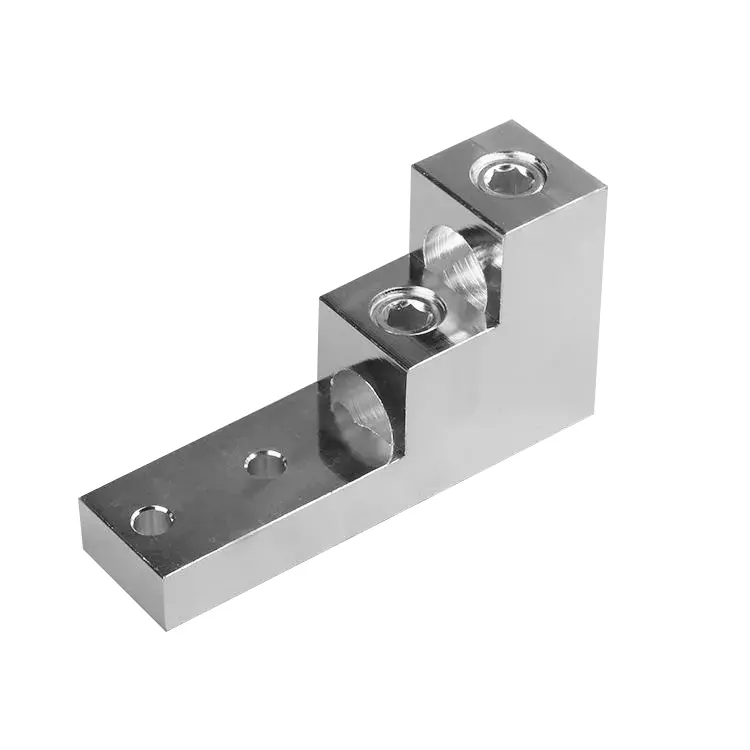
The Core Technical Issue: Galvanic Corrosion and Thermal Expansion
Copper and aluminum have distinct electrochemical potentials. When directly contacted without proper mitigation, moisture and temperature cycles accelerate galvanic corrosion at the interface. Additionally, aluminum expands and contracts nearly 40% more than copper under load cycling, which can loosen mechanical pressure over time. Therefore, the answer depends entirely on the lug design, plating material, and the manufacturer’s stated rating.
Most standard 600 MCM-2 2 Conductor Panelboard Lugs are rated for either copper or aluminum, but not both simultaneously in the same port—unless explicitly marked “Cu/Al” on the lug body. However, many panelboard lugs feature dual-rated markings that allow separate ports for each metal, or they permit mixed termination if a bi-metallic plating (e.g., tin-plated copper) and a calibrated belleville washer system are used.
Critical Criteria for Mixed-Metal Termination
| Criterion | Requirement for Safe Mixed Use |
|---|---|
| Lug Marking | Must clearly state “Cu/Al” or “Al9Cu” per UL 486A-486B |
| Plating | Tin or nickel plating over copper base to reduce oxide formation |
| Torque Value | Higher torque (often 375–450 in-lb) required for aluminum to maintain compression |
| Anti-Oxidant Compound | Mandatory for aluminum conductors (e.g., NO-ALOX) applied before insertion |
| Wire Class | Both conductors must be Class B or C stranded—no solid aluminum in same port |
| Temperature Rating | 75°C or 90°C insulation rating, with lug calibrated for the lower of the two |
Practical Field Recommendation
Based on thousands of installations, Kangshuai advises a strict policy: do not place one copper and one aluminum conductor into the same barrel of any 600 MCM-2 2 Conductor Panelboard Lugs unless the lug datasheet explicitly confirms mixed-metal suitability. Instead, use dedicated ports per conductor type, or employ a bi-metallic splice reducer that transitions from aluminum to copper before entering the lug.
For applications requiring two aluminum conductors or two copper conductors, Kangshuai manufactures 600 MCM-2 2 Conductor Panelboard Lugs with dual independent pressure bars and independent torque indicators, ensuring each conductor receives calibrated, stable compression without cross-metal interaction.
Visual Checklist for Safe Installation
-
□
Verify lug catalog number against UL File E number
-
□
Confirm conductor stranding matches lug class rating
-
□
Clean aluminum surface with wire brush immediately before insertion
-
□
Apply approved oxide-inhibiting compound (full coverage)
-
□
Use a calibrated torque wrench—never impact tools
-
□
Perform a pull test (≥ 50 lbf) after torque
-
□
Record torque value on panel schedule for future inspection
Frequently Asked Questions (FAQ)
Q1: Can I terminate one copper and one aluminum conductor in the same port of 600 MCM-2 2 Conductor Panelboard Lugs?
A: No, unless the lug is specifically dual-rated and marked “Cu/Al” with a tin-plated finish. Even then, many engineers avoid this practice because differential thermal expansion often loosens the aluminum side over time. The safest approach is to use separate ports. Kangshuai offers 600 MCM-2 2 Conductor Panelboard Lugs with isolated chambers for each conductor, preventing physical contact between dissimilar metals.
Q2: What torque value should I apply for aluminum conductors in 600 MCM-2 2 Conductor Panelboard Lugs?
A: For 600 MCM aluminum (Class B stranding), the recommended torque ranges from 375 to 425 in-lb for most tin-plated copper lugs. However, you must always consult the lug manufacturer’s supplied torque table—never rely on general charts. Kangshuai laser-engraves the specific torque range on every lug body, and we recommend re-torquing after 24 hours of full load operation to compensate for initial cold flow of aluminum strands.
Q3: Are 600 MCM-2 2 Conductor Panelboard Lugs with tin plating sufficient to prevent galvanic corrosion when mixing metals?
A: Tin plating significantly reduces galvanic potential but does not eliminate it entirely. The voltage difference between tin-plated copper and aluminum remains ~0.5V in wet environments. To achieve a truly stable connection, the plating must be combined with a dielectric oxide-inhibitor and a stainless-steel pressure spring that maintains constant force despite thermal cycles. Kangshuai uses a 3-layer plating process (nickel barrier + tin topcoat) and incorporates a beryllium-copper belleville washer, which collectively pass the 1000-hour salt-spray test per ASTM B117—giving you documented protection for mixed-metal installations.
Summary Table: Recommended Configurations
| Configuration | Acceptable? | Notes |
|---|---|---|
| 2 Cu conductors in same lug | Yes | Standard application |
| 2 Al conductors in same lug | Yes | Must use oxide inhibitor and higher torque |
| 1 Cu + 1 Al in same barrel | Not recommended | Only if lug explicitly dual-rated and tested |
| 1 Cu in Port A, 1 Al in Port B (dual-port lug) | Yes | Preferred method—Kangshuai standard design |
| Cu pigtail spliced to Al before lug | Yes | Use certified bi-metallic connector outside the lug |
Why Choose Kangshuai for Your Panelboard Lug Needs
With over 15 years of copper-alloy forging experience, Kangshuai produces 600 MCM-2 2 Conductor Panelboard Lugs that exceed UL 486B and CSA C22.2 No. 65 requirements. Every batch undergoes random destructive pull-out testing, hardness verification, and plating thickness measurement. Our dual-port, dual-metal design eliminates the uncertainty of mixed terminations by physically separating conductors while maintaining a compact footprint compatible with most 600A panelboards.
Contact Us
Have a specific panelboard layout or need torque schedules for your project? Our engineering team provides free lug selection drawings and torque verification templates. Visit our product page or email us directly to request samples of 600 MCM-2 2 Conductor Panelboard Lugs with custom plating options. Kangshuai supports same-day technical consultations for North American and European projects—reach out now and ensure your terminations are code-compliant from day one.