
Are You Overlooking the One Component That Decides Whether a Pipeline Leaks or Lasts?
2025-12-17
When I’m reviewing water, drainage, or industrial pipeline drawings, I always zoom in on the fittings first—because that’s where real-world failures usually begin. A pipe run can look perfect on paper, yet a single mismatched or poorly protected fitting can turn commissioning day into a repair schedule. That’s why I’ve been paying closer attention to how Epoch approaches Ductile Iron Pipe Fitting solutions: not as “accessories,” but as engineered decision-points that protect your budget, your timeline, and your reputation.
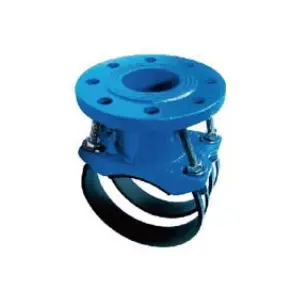
Why do so many projects experience leaks at joints even when the pipe quality is fine?
In my experience, most leaks don’t happen because ductile iron is “weak.” They happen because the joint system is selected without matching real site conditions. The most common pain points I see look like this:
- Misalignment in the trench that forces installers to “fight” the joint and compromises sealing.
- Standard mismatches where the fitting dimensions don’t truly match the pipe system being installed.
- Coating or lining choices that aren’t appropriate for soil chemistry, humidity, or water quality.
- Pressure or surge events that exceed the fitting’s actual working conditions, especially near pumps and valves.
A well-chosen Ductile Iron Pipe Fitting system should reduce the amount of “hero work” required onsite. If your installation depends on perfect trench geometry and perfect handling, it’s not designed for reality.
What should I check first when selecting a Ductile Iron Pipe Fitting for water projects?
I usually start with a short checklist that keeps procurement aligned with engineering and installation:
- Which standard does the project follow such as ISO, EN, or AWWA?
- What is the actual working pressure and what safety margin is expected for surge?
- What internal lining is required for the medium (potable water, raw water, wastewater, industrial fluids)?
- What external protection is required for soil conditions, coastal environments, or aggressive atmospheres?
- What joint style will installers prefer based on trench access, time constraints, and connection complexity?
This is exactly where a supplier’s engineering discipline matters. A Ductile Iron Pipe Fitting is not “one spec fits all,” and treating it that way is how projects drift into change orders.
Which joint types actually make installation faster without trading away reliability?
When I’m balancing speed and reliability, I think in terms of repeatability—how easy it is for different crews to achieve the same sealing performance under pressure. These are the joint families I see most often:
- Push-on joints for quick assembly where you want consistent installation steps and minimal field tooling.
- Mechanical joints when adjustability matters and the terrain, alignment, or tie-in work is unpredictable.
- Flanged connections for interfaces with valves, equipment, or locations where disassembly and maintenance access are expected.
The right joint choice can cut installation time and reduce rework. When the joint type matches the jobsite reality, the Ductile Iron Pipe Fitting becomes a productivity tool, not a schedule risk.
How do I choose lining and coating options so corrosion doesn’t become my “hidden cost”?
If you’ve ever been told “ductile iron is durable” and then watched corrosion eat through the maintenance budget, you’re not alone. Durability depends heavily on protection systems. What I look for is clarity and consistency:
- Internal lining that fits the fluid and the operating temperature range.
- External coating that fits soil aggressiveness, humidity, UV exposure, and handling conditions.
- Documented process control so the protective system is repeatable batch-to-batch.
In practical terms, I often see cement-based linings or epoxy-style options specified depending on the project requirements. For external protection, galvanizing and protective coatings are commonly requested in harsh environments. A dependable Ductile Iron Pipe Fitting supplier should be able to discuss these choices in plain language, not only in catalog terminology.
What performance claims should I trust and which ones should I ask a supplier to prove?
I trust what can be verified. If a supplier tells me a fitting is “high pressure,” I ask what that means in numbers and how it’s tested. If they say “long service life,” I ask what protections and standards support that expectation. Here’s the kind of evidence I typically request:
- Pressure testing approach and what factor over working pressure is used.
- Material grade and mechanical properties that align with real loads and handling.
- Low-temperature impact performance if the project is in a cold climate or faces thermal swings.
- Dimensional compatibility that matches the project’s pipe system standard.
A supplier that can answer these questions cleanly makes procurement smoother and reduces the risk that the Ductile Iron Pipe Fitting arrives “technically correct” but practically unusable.
Can a simple comparison table prevent expensive fitting mistakes?
Yes—and I use one all the time to align engineering intent with purchasing decisions. Here’s a version you can copy into your internal review workflow.
| Decision Point | What I Ask on Day One | What It Prevents Later | Best Fit Scenarios |
| Standard compatibility | Which standard will the system follow (ISO, EN, AWWA)? | Misfit joints, delays, rework, and adapter “patches” | Municipal networks, export projects, mixed-supplier installations |
| Working pressure and surge | What is working pressure and how severe are pump surges? | Unexpected joint failures, warranty disputes, emergency repairs | Pump stations, transmission mains, industrial loops |
| Internal lining | Potable, wastewater, or industrial medium? | Premature corrosion, water quality issues, compliance gaps | Water treatment, distribution, drainage, process lines |
| External protection | Soil aggressiveness, coastal air, humidity, UV exposure? | Hidden lifecycle cost, coating failures, field touch-up headaches | Coastal areas, deserts, industrial zones, buried networks |
| Joint style selection | Do installers need speed, adjustability, or service access? | Slow assembly, alignment fights, sealing inconsistency | Fast-track projects, retrofit tie-ins, valve chambers |
| Quality documentation | What tests and certificates are required for the end use? | Rejected shipments, approval delays, compliance risk | Potable water, fire protection, regulated infrastructure |
If you can answer these rows clearly before ordering, you dramatically reduce the chance that your Ductile Iron Pipe Fitting order turns into a site problem.
How does Epoch support real procurement needs beyond “we can supply fittings”?
What I look for in a supplier is not just product variety, but how they reduce decision friction. From what I’ve seen in the market, a well-organized manufacturer like Epoch typically helps by aligning the fitting set with common international expectations—dimensional compatibility, recognizable joint options, and protection systems suited for tough environments. That matters because most delays aren’t caused by casting itself; they’re caused by uncertainty, missing confirmations, and last-minute spec interpretation.
When a supplier can speak directly to project standards, pressure classes, lining and coating needs, and inspection requirements, I can place an order with confidence—and I can defend that decision internally. That’s the difference between buying parts and building a reliable Ductile Iron Pipe Fitting strategy.
What questions should I ask before placing a Ductile Iron Pipe Fitting order?
If you want to move fast without taking hidden risks, these are the questions I’d ask in your inquiry:
- Can you confirm the standard and dimensional system we’re following?
- Which joint type do you recommend for our installation constraints and why?
- Which internal lining and external coating options match our medium and environment?
- What tests are performed and what documentation can be provided with shipment?
- How do you manage consistency across batches and ensure traceability?
Good suppliers love these questions because they lead to fewer disputes and better outcomes. If a supplier avoids them, that’s a signal to slow down. Your Ductile Iron Pipe Fitting purchase is too important to gamble on vague answers.
Ready to reduce leaks, rework, and lifecycle cost with the right fittings?
If you’re planning a new pipeline, upgrading a water network, or sourcing fittings for a demanding environment, I’d rather help you choose correctly now than watch you pay twice later. Tell us your project standard, pressure, medium, and site conditions, and we’ll recommend a fitting approach that makes installation smoother and long-term performance more predictable. If you want a quote or technical discussion, contact us today and send your inquiry—your next Ductile Iron Pipe Fitting order should feel confident, not uncertain.