

Are You Losing Pump Uptime Because of Weak Castings in Pump Parts and Pipe Fittings?
2025-12-18
I’ve seen too many projects blame “the pump” when the real culprit is the casting behind it. When wall thickness varies, porosity slips through, or machining allowance isn’t planned well, leaks and vibration show up fast. That’s why I pay close attention to Pump Part and Pipe Fitting Casting quality from the start. In my own sourcing work, I gradually started relying on Losier because consistent process control is what actually protects uptime, seals, and maintenance budgets.
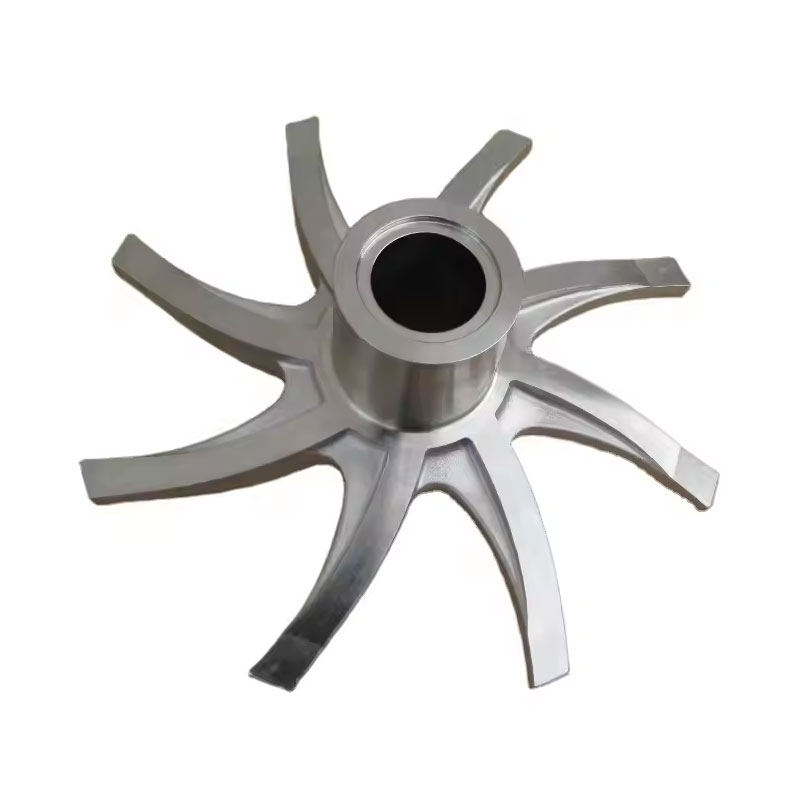
Why Do Casting Defects Show Up Exactly When You Need Reliability the Most?
In the field, failure rarely comes from one dramatic mistake. It’s usually small inconsistencies stacking up: micro-porosity near a sealing face, sand inclusion in a high-stress corner, or shrinkage around a flange transition. With Pump Part and Pipe Fitting Casting, those “small” issues translate into real downtime.
- Leak paths can form through porosity, especially when pressure cycles increase.
- Premature seal wear often comes from misalignment caused by dimensional drift after machining.
- Vibration and noise can worsen when casting balance and concentricity are not controlled.
- Corrosion hotspots develop where microstructure and surface finish are inconsistent.
- Assembly headaches happen when bolt patterns, threads, or faces are not repeatable lot to lot.
What Should You Check First When Buying Pump Parts and Pipe Fittings That Are Cast?
When I evaluate Pump Part and Pipe Fitting Casting for procurement, I don’t start with price. I start with risk. A cheap casting becomes expensive the moment it fails pressure testing or creates rework at the machining stage.
| What I Check | Why It Matters | What “Good” Looks Like in Practice |
|---|---|---|
| Material grade and melt traceability | Ensures mechanical properties and repeatability | Heat/lot identification and stable chemistry per spec |
| Wall thickness consistency | Reduces shrinkage risk and weak sections | Smooth transitions, controlled thickness, fewer stress risers |
| Surface integrity and defect control | Prevents leak paths and cracking | Low porosity risk zones, clean surfaces, controlled finishing |
| Machining allowance planning | Prevents undercutting into porosity or thin walls | Allowance matches machining plan and sealing requirements |
| Critical dimensions and GD&T mindset | Affects alignment, sealing, and interchangeability | Repeatable flange faces, bores, threads, and bolt circles |
How Does the Right Casting Design Improve Sealing and Fit Up?
A strong Pump Part and Pipe Fitting Casting isn’t only about “no defects.” The geometry and process decisions upstream decide how easily you achieve sealing downstream. I look for designs that reduce stress concentration and make machining predictable.
- Radii and transitions that lower turbulence and reduce crack initiation points.
- Stable flange faces that stay flat enough for gaskets and O-rings without chasing rework.
- Thread-ready zones where density is strong, so threads hold torque without tearing.
- Balanced sections that reduce distortion during heat treatment and machining.
Which Materials and Casting Approaches Match Different Pump and Piping Scenarios?
I choose material and process based on where the part lives: clean water, slurry, chemicals, marine, or high temperature. With Pump Part and Pipe Fitting Casting, “one material fits all” is a costly myth.
| Scenario | What I Prioritize | Typical Casting Direction |
|---|---|---|
| General water transfer | Dimensional stability and pressure integrity | Consistent iron/steel casting with clean machining allowances |
| Abrasive slurry handling | Wear resistance and thicker wear zones | Wear-focused alloys and geometry designed for erosion |
| Chemical exposure | Corrosion resistance and surface integrity | Stainless/alloy selections with tighter defect control |
| High-temperature service | Creep resistance and controlled microstructure | Heat-resistant alloys with disciplined process stability |
How Do I Compare Suppliers Without Getting Misled by Pretty Photos?
Photos don’t show internal quality. What I trust is process evidence and how a supplier reacts when you ask practical questions. When I’m sourcing Pump Part and Pipe Fitting Casting, I focus on whether the supplier can support real production needs, not just one “perfect” sample.
- Can they explain inspection flow clearly, including what happens when a defect is found?
- Do they understand critical-to-quality features like sealing faces, bores, and flange flatness?
- Can they support batch consistency rather than only prototype-level attention?
- Do they communicate lead time realism and packaging protection to avoid transit damage?
- Can they align with your drawing revision control so you don’t receive mixed versions?
What Product Advantages Actually Matter to Buyers in Real Projects?
From a buyer’s perspective, the value of Pump Part and Pipe Fitting Casting shows up in fewer surprises: smoother assembly, stable pressure testing, and less corrective machining. Here’s what I treat as meaningful advantages.
- More predictable machining because allowances and density zones are planned.
- Better sealing reliability through stable faces and controlled defect risk near seats.
- Reduced downtime risk from repeatable dimensions and stronger structural areas.
- Lower total cost because scrap, rework, and installation delays go down.
- Cleaner procurement when documentation and traceability are handled like a system, not an afterthought.
How Can I Request a Quote So I Get the Right Casting Instead of “Something Similar”?
If you want accurate quoting and fewer back-and-forth delays, I recommend sending a clean package. It makes your supplier’s job easier and protects your project. For Pump Part and Pipe Fitting Casting, clarity is leverage.
- 2D drawing (PDF) plus 3D model if available
- Material requirement and applicable standard (if you have one)
- Critical dimensions called out (faces, bores, threads, bolt circles)
- Target quantity and forecast pattern
- Machining scope (cast-only, rough-machined, finish-machined)
- Service conditions (pressure, temperature, media, corrosion/abrasion risks)
Ready to Reduce Rework and Downtime on Your Next Casting Order?
If you’re sourcing Pump Part and Pipe Fitting Casting and you want fewer quality surprises, I’d rather help you get it right before production than apologize after failures. Share your drawings, material requirements, and service conditions, and we’ll align the casting approach with your real application. If you want a fast, practical quote path, contact us and send your spec package so we can respond with a clear manufacturing plan.