

Are Corten Steel Privacy Screens Worth the Investment Compared to Wood or Aluminum
2026-10-30
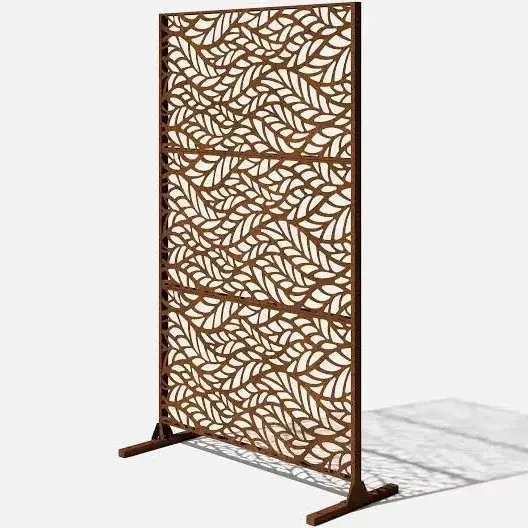
When homeowners and landscape architects weigh their options for outdoor privacy, the decision often comes down to three materials: wood, aluminum, and Corten Steel Privacy Screen systems. Each has merits, but few combine durability, aesthetics, and long-term value like a Corten Steel Privacy Screen from Vionta. This comparison breaks down the real costs and performance factors so you can decide with confidence.
The Core Comparison at a Glance
| Factor | Corten Steel Privacy Screen | Wood | Aluminum |
|---|---|---|---|
| Lifespan | 50+ years | 10–15 years | 20–30 years |
| Maintenance | Minimal (patina self-seals) | Annual staining/sealing | Occasional cleaning |
| Weather resistance | Excellent (corrosion-resistant) | Prone to rot, warping | Good, but dents easily |
| Aesthetic character | Warm, evolving rust patina | Natural but fades | Uniform, industrial |
| Recyclability | 100% recyclable | Limited | High |
| Upfront cost | Higher | Lower | Moderate |
| 20-year total cost | Lowest | Highest (replacement + upkeep) | Moderate |
Why Upfront Cost Misleads Buyers
Wood looks affordable on day one, but the true cost emerges over time. A cedar or pressure-treated screen typically needs re-staining every two to three years, and replacement every 10–15 years due to rot and insect damage. Aluminum resists rot but can dent, fade, and require refinishing in coastal or high-sun environments.
A Corten Steel Privacy Screen behaves differently. The weathering steel forms a protective oxide layer that seals the surface and halts further corrosion. This patina stabilizes within 18–36 months and then requires virtually no upkeep. Vionta engineers each panel for structural rigidity, so panels resist wind load and impact far better than thin-gauge aluminum.
Design Flexibility and Property Value
Beyond durability, a Corten Steel Privacy Screen delivers architectural character that wood and aluminum struggle to match. The living rust finish shifts tone with the seasons and pairs beautifully with greenery, gravel, and modern cladding. Vionta offers custom laser-cut patterns, adjustable panel heights, and modular mounting systems, allowing designers to create bespoke privacy solutions without compromising structural integrity. Appraisers consistently note that distinctive, low-maintenance landscape features support resale value.
Sustainability Considerations
Corten steel is 100% recyclable and produces no chemical runoff once the patina stabilizes. Wood treatments often leach sealants and stains into soil, while aluminum production is energy-intensive. For projects targeting green building certifications, a Corten Steel Privacy Screen is a defensible specification.
Frequently Asked Questions
Q: How long does a Corten Steel Privacy Screen last compared to wood?
A: A Corten Steel Privacy Screen typically lasts 50 years or more with minimal maintenance, while wood screens last 10–15 years and require regular staining and eventual replacement.
Q: Does a Corten Steel Privacy Screen rust through over time?
A: No. The surface develops a stable oxide patina that protects the steel beneath; Vionta panels are engineered with appropriate thickness so the screen will not rust through under normal outdoor conditions.
Q: Is a Corten Steel Privacy Screen more expensive than aluminum upfront?
A: Yes, the initial cost is usually higher than aluminum, but the Corten Steel Privacy Screen eliminates refinishing, resists denting, and lasts decades longer, delivering a lower total cost of ownership.
The Verdict
Wood wins only on initial price; aluminum wins on lightweight handling. For longevity, design impact, and lifecycle cost, a Corten Steel Privacy Screen is the stronger investment. Vionta backs that claim with precision fabrication and project-ready customization.
Contact us today to request samples, pricing, or a custom specification for your next Corten Steel Privacy Screen project.