

Top SMD Chip Resistor Picks for High-Performance Circuit Design
2026-07-26
In high-performance circuit design, every milliohm matters. Selecting the right SMD chip resistor can make or break your project's efficiency, stability, and precision. As demands for miniaturization and reliability soar, the market offers countless options—but not all resistors are created equal. This guide dives into the top picks that combine cutting-edge technology with real-world performance, helping you navigate specs and trade-offs with confidence. Whether you're fine-tuning a power supply or pushing signal integrity, Milliohm has you covered with insights that cut through the noise.
Precision at Small Scales: Why Tolerance Matters
In the realm of micro-manufacturing and precision engineering, tolerances are not just numbers on a blueprint—they define whether a component functions or fails. When working at scales where a single micron can mean the difference between a perfect seal and a leak path, the margin for error shrinks dramatically. Traditional manufacturing approaches that accept slight variations become untenable here; instead, each cut, mold, or assembly must adhere to incredibly tight specifications, often measured in thousandths of a millimeter.
Consider a microfluidic device used in medical diagnostics: channels carved into a polymer chip must have precisely controlled dimensions to regulate fluid flow. A deviation of just a few microns could alter capillary action, leading to incorrect test results. This is where the concept of tolerance becomes critical—it’s not merely about achieving a target dimension but maintaining it consistently across thousands of units. The interplay between material properties, thermal expansion, and tool wear means that holding such tight tolerances is a continuous battle, requiring sophisticated feedback systems and environmental controls that many large-scale operations never need to contemplate.
Beyond functionality, tolerance at small scales often dictates the success of emerging technologies. In optics, for instance, the alignment of microlenses in an array must be within sub-micron accuracy to avoid image distortion. Similarly, in the assembly of miniature electronic connectors, a tolerance slip can cause intermittent connections that are notoriously difficult to diagnose. Ultimately, embracing the challenge of precision at these scales fosters innovation; it pushes engineers to develop new measurement techniques, better materials, and smarter processes. The relentless pursuit of tighter tolerances isn’t just about avoiding failure—it’s the driving force behind breakthroughs that redefine what’s possible in fields from aerospace to biotechnology.
Thermal Stability: Resistors That Keep Their Cool
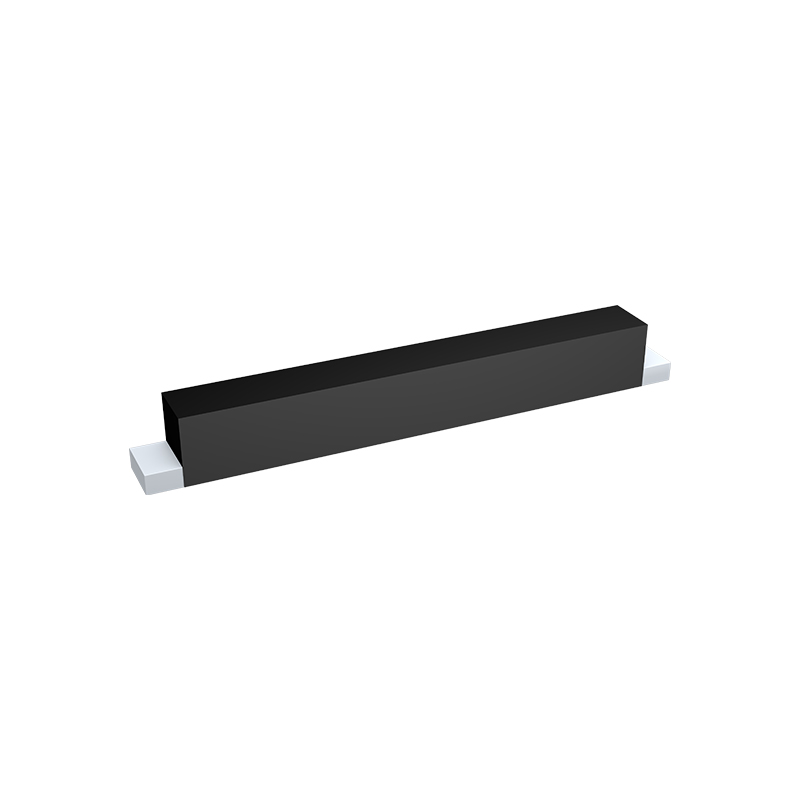
Resistors are often the unsung heroes of electronic circuits, quietly managing current and voltage without drawing much attention—until heat enters the picture. Under heavy loads or in high‑temperature environments, ordinary resistors can drift in value, causing circuits to misbehave or even fail altogether. The key to reliability lies in components that maintain their specified resistance no matter how hot things get, essentially keeping their cool when the pressure is on.
Achieving this level of thermal poise isn’t just a matter of choosing the right material; it’s a careful balance of design, manufacturing precision, and material science. Metal‑film and wire‑wound resistors, for instance, are engineered to exhibit minimal temperature coefficients, meaning their resistance barely budges as the mercury rises. Add to that robust housings and thoughtful heat dissipation, and you get a component that laughs in the face of thermal stress—ideal for everything from precision instrumentation to automotive electronics that bake under the hood.
Engineers who prioritize long‑term stability don’t just pick a resistor that works on paper; they look for parts proven to handle repeated thermal cycles without degradation. The best thermally stable resistors are those that combine low drift with predictable behavior, so a circuit designed today will still perform flawlessly years down the line. It’s this blend of endurance and consistency that transforms a simple passive component into a cornerstone of dependable electronics, quietly keeping its cool while everything else heats up.
Noise-Free Signals: The Role of TCR and VCR
In the crowded spectrum of modern communications, the clarity of a signal often dictates the success or failure of a connection. This is where TCR (Total Channel Reliability) and VCR (Virtual Carrier Resilience) step in, forming a robust backbone that filters out interference and preserves the integrity of transmitted data. Rather than simply boosting power, these mechanisms intelligently adapt to environmental noise, ensuring that the message arrives as intended, even in the most chaotic electromagnetic landscapes.
Think of TCR as a vigilant guardian of the entire transmission path. It continuously monitors channel conditions, dynamically adjusting parameters to sidestep fading, multipath distortion, and sudden interference. Meanwhile, VCR operates on a more granular level, creating a resilient virtual carrier that maintains synchronization even when physical carrier signals wobble. Together, they form a partnership that doesn't just reduce errors—it virtually eliminates the conditions that cause them, making dropouts a rarity.
What sets this approach apart is its proactive nature. Traditional systems often react to noise after it degrades the signal, but TCR and VCR predict and preempt issues before they manifest. This results in a user experience that feels effortlessly clean, whether you're streaming high-definition video in a moving vehicle or relying on critical telemetry in an industrial setting. In essence, these technologies don't just manage noise—they create an environment where noise becomes irrelevant, leaving only the pure, intended signal behind.
Power Handling in Tiny Packages
Cramming more watts into less space has become a defining challenge of modern electronics. As devices shrink, the demand for higher power output doesn't relent—if anything, it intensifies. Designers now grapple with the physics of heat dissipation and current density in packages so small they can be mistaken for dust specks. The trick lies not just in clever layout but in rethinking the materials and structures that allow electrons to flow with minimal resistance and well-managed thermal paths.
Gallium nitride and silicon carbide have rewritten the rules, enabling transistors that switch faster and run cooler than their silicon ancestors. These wide-bandgap semiconductors handle voltage and current with a fraction of the loss, meaning a tiny wafer-level package can sustain what once required a heatsink sprawling across the board. Even passive components have evolved—multilayer ceramic capacitors and metal alloy inductors now pack magnetic and electrostatic energy into geometries barely visible to the eye, all while keeping parasitic effects in check.
The payoff surfaces in everyday products: phone chargers the size of a thumb that deliver 65 watts, or power tools shedding weight without sacrificing torque. Automotive systems, too, benefit when distributed power modules tuck into nooks inside a door or mirror, eliminating bulky wiring harnesses. This miniaturization doesn't just save space; it opens up design freedom, letting engineers place power delivery exactly where it's needed, no longer tethered to a centralized, oversized supply.
Material Matters: Thin Film vs. Thick Film
The choice between thin film and thick film technology isn't just a technical footnote—it fundamentally shapes how a component behaves under stress, heat, and time. Thin films, deposited through precise vacuum processes like sputtering or evaporation, offer unmatched uniformity and tighter tolerances, making them the go-to for high-frequency or precision analog circuits where every fraction of a decibel matters. The material is laid down atom by atom, resulting in a microstructure that's dense and highly controlled. Thick films, on the other hand, start as a paste—a mix of glass frit, metal particles, and organic binders—screen-printed and fired in air. That ceramic-fired heritage gives them a robustness that shines in power electronics, but the finished layer retains a granular, porous character that influences everything from noise to long-term drift.
Material intimately dictates the manufacturing dance. Thin film resistor networks, for instance, rely on nickel-chromium or tantalum nitride alloys that can be laser-trimmed to 0.01% ratios and stay stable over thousands of hours. The drawback? You're limited to planar, low-profile geometries and substrates that survive vacuum deposition. Thick film pastes are far more forgiving—silver, palladium-silver, or ruthenium oxide blends can be printed onto ceramics, metals, or even curved surfaces, and the curing process is simple enough for high-volume, low-cost production. But that paste-based path traps tiny voids during firing, which can introduce parasitic capacitance or become failure sites under thermal cycling. It's the classic trade-off: precision versus ruggedness, with material science drawing the battle lines.
What often gets overlooked is how these films age. A thin film resistor sitting in a stable environment might see its value wander by less than 0.05% over a decade, thanks to its ordered crystalline structure. Thick films, with their glassy matrix and embedded metal oxides, can absorb moisture or develop microcracks that shift resistance gradually, especially in humid or unheated enclosures. For a design engineer, that means a thin film part in a precision analog front-end is buying peace of mind, while a thick film power resistor on a motor drive is chosen with the assumption that drift is acceptable within the circuit's safety margins. The material choice isn't just about initial specs—it scripts the lifetime narrative of the product.
Real-World Performance: Matching Resistors to Your Design
Resistor tolerances are just the starting point. Temperature drift, voltage coefficient, and parasitic inductance can quietly throw off a precision circuit. A 0.1% thin film part might look perfect on the bill of materials, but if it shifts 50 ppm/°C and your enclosure runs warm, the actual error might be larger than expected. Knowing how each parameter behaves under load is what separates a reliable design from one that only works on a bench.
Layout and component selection go hand in hand. For high-speed or high-gain stages, even a few nanohenries of lead inductance can turn a simple feedback network into an oscillator. Pairing resistors with mismatched temperature coefficients in a differential pair creates drift that no amount of calibration can fully erase. Sometimes the best upgrade isn't a tighter tolerance but a symmetrical layout with parts from the same batch, sharing thermal and environmental conditions as closely as possible.
Off-the-shelf resistors can handle most jobs, but pushing the limits demands a closer look at the datasheet graphs rather than just the headline numbers. Noise performance, pulse handling, and long-term stability often reveal themselves only in real operating conditions. Running a part at half its rated power might keep it cool, but it's the subtle changes over hundreds of hours that determine whether your gain stays consistent or slowly walks away from its target.
FAQ
SMD chip resistors provide excellent thermal stability and low parasitic effects, which are critical for maintaining signal integrity in high-speed or precision analog circuits. Their small footprint also helps reduce board space and improves overall reliability in dense layouts.
Focus on the actual dissipation under worst-case conditions and derate by at least 50% to avoid hotspots. For high-speed designs, also consider pulse handling capability—thin film types often handle transients better due to their homogeneous material structure.
Thin film resistors offer lower noise, tighter tolerance, and a more stable temperature coefficient. In RF circuits, their superior high-frequency performance and minimal parasitic capacitance make them the go-to for impedance matching networks.
TCR directly affects accuracy over temperature swings. For precision analog paths, even a 25 ppm/°C drift can introduce measurable errors. Choosing a resistor with 10–15 ppm/°C or better ensures consistent performance without complex compensation.
Yes, package dimensions matter. Smaller packages like 0201 or 0402 have lower parasitic inductance, which is crucial above a few GHz. Avoid wider terminations and consider flip-chip or thin film wraparound styles to keep the current path short and inductance minimal.
Check AEC-Q200 certification and examine the manufacturer's sulfur-resistant construction if the module might see harsh environments. Also, review high-temperature operating life (HTOL) test data and look for anti-corrosion barrier layers in the resistor's construction.
Current noise and excess noise (sometimes called flicker noise) can dominate in low-noise circuits. Always check the resistor's noise index or ask the vendor for typical noise data—thick film parts can be surprisingly noisy, while metal foil or thin film are usually quieter.
While possible, it's not ideal. Dedicated current-sense resistors with low TCR and Kelvin terminals give far better accuracy. Standard resistors can introduce significant measurement error due to lead resistance and thermal EMF, especially at high current.
Conclusion
Selecting the right SMD chip resistor for high-performance circuits goes beyond nominal specs. Precision at small scales starts with tight tolerance—often 0.1% or better—to maintain signal integrity in feedback networks and reference dividers. But tolerance alone isn’t enough. Thermal stability keeps resistance values steady under load and ambient shifts, preventing drift that could degrade system accuracy. Resistors with low TCR and VCR are essential for noise-free signals, especially in precision analog and sensor front-ends where even microvolt-level aberrations matter.
Power handling in tiny packages demands careful derating and attention to thermal management, especially when multiple resistors crowd a dense board. Material choices—thin film versus thick film—dictate performance boundaries. Thin film excels in precision, low noise, and stability, while thick film offers higher power and pulse withstand in a cost-effective form. Real-world performance hinges on matching the resistor’s parasitic inductance, capacitance, and pulse rating to your design’s actual operating environment. Our top picks balance these trade-offs, giving you reliable performance from concept to production.
Contact Us
Contact Person: Yuying Gao
Email: [email protected]
Tel/WhatsApp: +86 18926013721
Website: https://en.milliohm.net/