

Substantial Rotary Joints: Core Design Principles for Reliable Fluid Transfer
2026-07-20
In the world of industrial machinery, where precision and reliability are non-negotiable, the unsung hero often lies in the connections that keep everything flowing. Enter rotary joints—critical components that enable seamless fluid transfer between stationary and rotating equipment. But not all rotary joints are created equal; the difference between a system that hums and one that stutters often comes down to core design principles. Whether it's managing extreme pressures, corrosive media, or relentless speeds, the engineering behind these joints determines their longevity and performance. At MOFLON, decades of innovation have distilled into a design philosophy where every groove, seal, and material choice counts. In this post, we peel back the layers of substantial rotary joint design, revealing the key principles that ensure flawless operation in the most demanding environments. Get ready to rethink what flows through your machinery—and why it matters more than you think.
Crafting Resilience: Material Selection for Harsh Environments
Building equipment that endures extreme conditions starts with a clear-eyed assessment of the environment. Whether it’s salt-laden sea air, abrasive desert dust, or corrosive chemical exposure, each threat demands a tailored material response. Engineers often begin by mapping out the specific stressors—humidity cycles, thermal shock, UV radiation—and then cross-referencing them with material properties like pitting resistance, creep strength, and galvanic compatibility. This upfront detective work prevents over-engineered solutions and ensures that the final choice doesn’t just survive but thrives.
Alloys like duplex stainless steels and nickel-based superalloys frequently head the list for good reason, but resilience often comes from an unexpected combination. A glass-fiber reinforced polymer might outperform titanium in a chlorine-rich atmosphere, while a clever laminate of different metals can resist both abrasion and impact in a single component. The art lies in understanding the failure mechanisms that unfold over time—how micro-cracks propagate, how protective oxides form and dissolve—and choosing a material that turns the environment’s aggression into a predictable, manageable wear pattern rather than a catastrophic surprise.
Beyond the lab data, field-proven resilience leans heavily on fabrication and maintenance realities. A high-performance alloy that requires exotic welding procedures or post-weld heat treatment might introduce weaknesses at the joint, undermining its theoretical durability. Smart selection weighs not only the material’s innate toughness but also how it integrates into existing repair workflows and supply chains. This practical lens often shifts choices toward metals with long track records or ceramics with simple mounting geometries, ensuring that resilience isn’t just a specification on paper but a dependable behavior in the field.
Seal Integrity Unlocked: Navigating Leak‑Free Performance
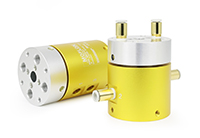
Achieving true seal integrity goes beyond material selection—it demands a holistic understanding of how pressure, temperature, and media interact at the sealing interface. Small geometric inconsistencies or dynamic shifts in operating conditions can undermine even the most robust components. By focusing on micro‑level surface finishes and precision mating, engineers can dramatically reduce weepage and catastrophic failure modes that plague conventional systems.
A proactive approach to leak‑free performance starts with real‑time monitoring and smart diagnostics. Instead of waiting for visible drips or pressure drops, modern systems embed sensors that track seal face temperature, vibration signatures, and acoustic emissions. This data not only flags early degradation but also guides predictive maintenance cycles—extending service intervals while preventing unscheduled shutdowns. The result is a quiet confidence in operations where safety and uptime converge.
Material innovation further unlocks this potential. Hybrid polymer‑metal composites and self‑healing elastomers are reshaping expectations, especially in cyclic high‑stress environments. These materials adapt to thermal swings and mechanical flexing without losing interfacial contact. When paired with installation techniques that compensate for bolt‑up variances, they form the backbone of a truly resilient sealing strategy—one where leak‑free becomes the rule, not the exception.
Load Distribution Dynamics: Bearing Design for Heavy‑Duty Rotation
In heavy-duty rotating equipment, the way loads travel through a bearing isn't just about raw capacity—it's a subtle interplay of geometry, material spring, and the path forces take from raceway to rolling element. The real challenge emerges when the load zone shifts under combined radial and thrust forces, creating spikes that even generous safety factors can miss. A well-thought-out design doesn't simply make everything thicker; it subtly reshapes the contact ellipse, guiding the pressure so it bleeds evenly across the surface instead of concentrating at the edges.
Crowning profiles on rollers, for instance, are rarely perfect cylinders. A carefully controlled logarithmic curve can prevent the edge loading that chews through fatigue life in a matter of months. Similarly, the internal clearance isn't a fixed number—it's a dynamic variable that shrinks under thermal expansion and centrifugal growth, altering the very distribution you modeled at standstill. Skilled engineers watch how the contact angles shift as the bearing settles into its working temperature, because a few degrees of change can completely invert which race carries the brunt of the load.
Beyond the macro geometry, the microstructure of the steel itself plays a quiet but pivotal role. Retained austenite content, residual stress patterns from heat treatment, and even the direction of the grain flow in the forged rings can divert crack propagation or, if mishandled, invite it. In applications where a bearing might see millions of cycles at a stretch, these subtle factors separate a design that merely works from one that lasts long enough to fade into the background of reliable machinery.
Thermal Equilibrium in Motion: Dissipating Heat Without Downtime
Modern machinery often walks a tightrope between performance and temperature. In continuous operation, heat buildup is inevitable, yet stopping to cool down disrupts workflow and kills productivity. The concept of thermal equilibrium in motion solves this by maintaining a stable temperature during operation. It’s not about preventing heat entirely—it’s about managing the exchange so seamlessly that the system stays within safe limits while running full tilt.
Achieving this balance relies on passive and active cooling strategies that work on the fly. Think of dynamic airflow designs that adjust with speed, or phase-change materials embedded in components that absorb heat spikes without a pause. The beauty lies in their invisibility: operators see uninterrupted output, unaware that a thermal dance is keeping everything from overheating. It’s engineering that favors rhythm over rest, turning potential downtime into a ghost that never haunts the production line.
Fluid Path Precision: Pressure and Flow Balancing Acts
Achieving precision in fluid paths demands an intimate understanding of how pressure gradients and flow rates influence each other in real time. Even microscopic deviations in channel geometry or surface roughness can cascade into significant shifts in system behavior, especially at low Reynolds numbers where viscous forces dominate. The challenge is not merely theoretical; it surfaces in everything from medical infusion pumps to semiconductor cooling loops, where a slight miscalibration can compromise safety or yield. Engineers often rely on dynamic feedback loops that monitor differential pressure across critical orifices, adjusting actuators within milliseconds to maintain the delicate equilibrium required by the process.
The balancing act becomes even more intricate when dealing with multiphase flows or non-Newtonian fluids, which refuse to follow the neat linear approximations of classical hydraulics. A slurry’s apparent viscosity might shift under shear, making a flow meter’s reading an artifact of the very pressure it tries to control. In such environments, predictive models fall short unless they account for transient behaviors like cavitation inception or air entrainment at sudden expansions. Some designers resort to passive flow restrictors that harness the fluid’s own momentum to self-regulate, while others embed piezoelectric sensors directly into the flow path to capture high-frequency instabilities that would otherwise go unnoticed.
Ultimately, the secret to fluid path precision lies not in fighting the inherent nonlinearities but in designing systems that accept and adapt to them. By mapping the complete pressure-flow envelope during commissioning, operators can identify stable zones where minor fluctuations self-correct rather than amplify. This empirical approach, combined with carefully staged restrictor networks, allows for a level of control that pure feedback algorithms rarely achieve on their own. The result is a silent choreography of pressure drops and velocity profiles that keeps processes humming at their optimal point, even when feedstock properties drift or ambient temperature swings by dozens of degrees.
Serviceability by Design: Simplifying Maintenance for Continuous Uptime
Achieving continuous uptime isn’t just about reactive fixes—it’s about weaving maintainability directly into system architecture. When components are designed with modularity and clear failure boundaries, teams can isolate, update, or replace parts without cascading disruptions. This proactive approach means fewer emergency patches and more controlled, predictable maintenance windows.
Standardizing interfaces and using well-documented APIs turns routine upkeep into a streamlined process. Instead of deciphering tangled dependencies, operators follow straightforward procedures that reduce human error. Diagnostics become faster, and rollbacks safer, because every element is built to be understood, not just to function.
Ultimately, serviceability by design shifts maintenance from a disruptive chore to an invisible background operation. With the right telemetry and graceful degradation mechanisms, systems self-diagnose and adjust even before users notice a blip. This culture of intentional maintainability keeps the focus where it belongs: on delivering uninterrupted value.
FAQ
Reliability in large rotary joints hinges on a few core elements: the integrity of the sealing system, the precision of the bearing arrangement, and the material compatibility with the fluid and operating environment. If the seals can't handle pressure fluctuations or thermal expansion, you'll get leaks. The bearings must distribute loads evenly to prevent misalignment, and all wetted parts need to resist corrosion or erosion from the media.
Material selection is make-or-break under high pressure. Hardened stainless steels or duplex alloys are often used for the body and shaft to prevent deformation, while seals might be engineered polymers like PTFE or PEEK blends that can take pressure without extruding or tearing. Even small mismatches can lead to galling or stress cracking, so the thermal expansion rates and hardness of mating surfaces become critical.
Seals are the frontline defense. For substantial joints, you're often looking at balanced mechanical seals or multi-lip designs that can compensate for wear and housing distortion. Spring-loaded or pressure-energized seals help maintain contact as pressure fluctuates. Advanced surface coatings on seal faces, like diamond-like carbon, reduce friction and heat, directly cutting down leak paths over time.
Bearings in these joints aren't just for smooth rotation—they carry significant radial and axial loads. Tapered roller or angular contact bearings are common because they handle combined loading well. If the bearing isn’t properly preloaded or aligned, you get wobble that kills seals fast. In large-diameter joints, split bearing arrangements might be used to ease maintenance without full disassembly.
It's a trade-off. Higher speeds can thin the lubricating film between seal faces, while high pressure can force that film out completely. Engineers often use computational fluid dynamics to model the gap thickness and adjust the seal face geometry or select a spring force that maintains an optimal film at the expected operating envelope. Sometimes, a controlled leak rate is designed in to cool and lubricate the faces.
Regular visual checks for drips or discoloration aren't enough. You need to monitor seal cavity temperatures and vibration trends. Scheduled re-greasing of bearings and flushing of debris from the seal area prevent abrasive damage. For critical applications, condition monitoring with sensors that track shaft displacement or acoustic emissions can predict failure weeks before a visible leak.
Thermal cycling makes everything expand and contract at different rates. If the housing and shaft have mismatched coefficients of thermal expansion, clearances can open up or squeeze the seals. Seals themselves may harden or soften outside their optimal range. To handle this, designers incorporate flexible metal bellows or graphite gaskets that can absorb dimensional changes without losing sealing force.
Precision machining of the housing bores and a robust support structure are a must. Flexible couplings or floating bearing housings can decouple the joint from connected equipment misalignment. Mass balancing of the rotary components and using damped support arms reduce transmitted vibration. Sometimes even adding an external steady rest bearing near the joint can make a night-and-day difference in stability.
Conclusion
Designing robust rotary joints demands a meticulous approach to material selection, especially for operations in aggressive environments where corrosion, extreme temperatures, or abrasive fluids are the norm. Engineers must evaluate alloys, engineered polymers, and advanced ceramics not just for their standalone resilience but for their compatibility in dynamic sealing interfaces. The heart of leak-free performance lies in seal integrity—achieved through carefully profiled faces and balanced mechanical loading that compensates for thermal expansion and wear without compromising fluid film stability. Under heavy-duty rotation, the bearing arrangement becomes critical; a thoughtful distribution of radial and axial loads, often via tapered roller or angular-contact configurations, prevents brinelling and ensures smooth, low-friction articulation even under substantial overhung loads.
Equally important is managing the thermal equilibrium that arises from continuous motion and fluid friction. Effective design integrates targeted cooling passages or thermal barriers to dissipate heat, safeguarding seal materials from degradation and preventing dimensional drift that could upset clearances. Precision in the fluid path is another balancing act—port geometries, internal galleries, and clearance volumes are optimized to minimize pressure drop while suppressing turbulence and cavitation, all while meeting the required flow rate. Finally, true reliability is realized through serviceability by design. Modular assemblies with accessible seal cartridges, externally adjustable wear compensators, and diagnostic ports for condition monitoring slash maintenance intervals and enable swift interventions, directly translating to prolonged uptime in demanding industrial operations.
Contact Us
Contact Person: Xiangpin Li
Email: [email protected]
Tel/WhatsApp: 86 186 1706 8578
Website: https://www.moflon.com