
OEM FRP Grating: Your Ultimate Guide to Custom Industrial Fiberglass Solutions
2026-07-25
When off-the-shelf grating just won’t cut it, tailored FRP solutions step in to solve the toughest industrial challenges. OEM FRP grating from Sino Grating offers a world of custom fiberglass configurations — from chemical resistance to precise load-bearing specs — all engineered to fit your exact environment. In this guide, we’ll unpack what makes custom FRP grating a smarter, longer-lasting choice and how partnering with a specialized manufacturer can streamline your next project.
Tailored FRP Grating Designs for Niche Industrial Needs
When standard grating solutions fall short, tailored FRP designs step in to address the unique demands of niche industrial environments. Unlike off-the-shelf options, these custom configurations are engineered from the ground up, factoring in specific chemical exposures, load-bearing patterns, and spatial constraints. By selecting specialized resin systems—such as isophthalic polyester for moderate corrosion or vinyl ester for aggressive acids—and adjusting fiber architecture, manufacturers can deliver gratings that outperform generic alternatives in both longevity and safety.
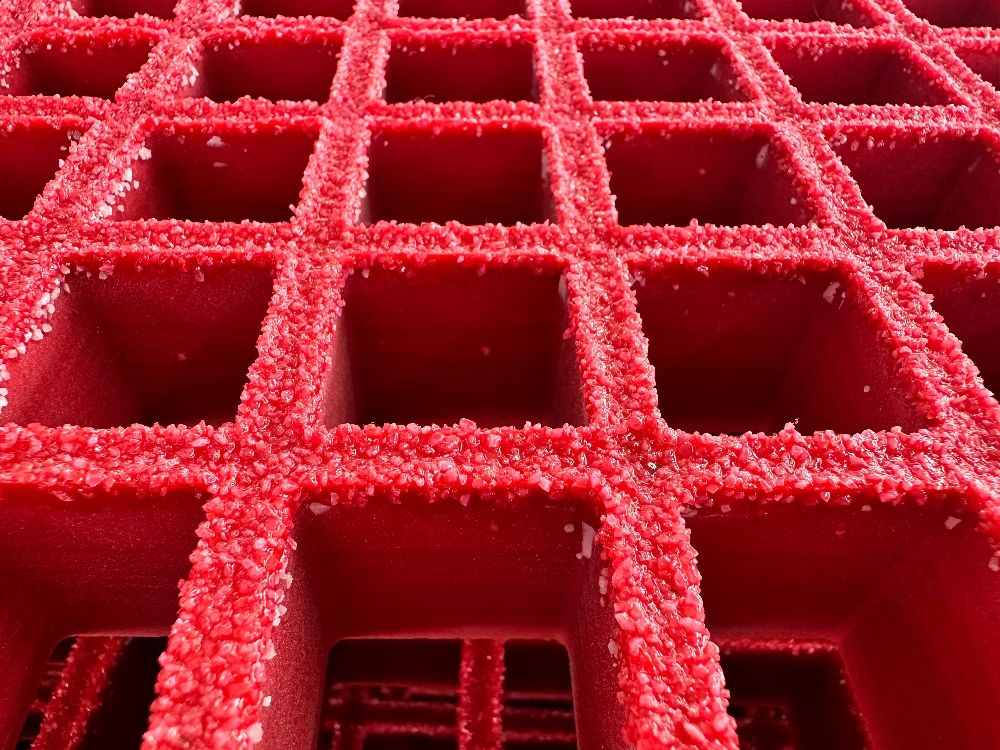
Consider a metal-refining facility where electrolytic cells release corrosive mists; here, grated flooring must not only resist pitting but also provide electrical insulation to protect workers. A bespoke FRP design might integrate a heavy-duty grit top for slip resistance, combined with a fire-retardant core to meet safety codes. In food-processing plants, where hygiene is paramount, gratings can be molded with a smooth, crevice-free surface and embedded with antimicrobial agents, while color coding helps segregate production zones. From marine walkways requiring UV-stabilized decks to pharmaceutical platforms needing static-dissipative properties, the adaptability of FRP allows for precise tuning of dimensions, panel shapes, and even fastener systems, ensuring that every installation precisely fits its operational context without compromise.
Why Off-the-Shelf Grating Fails in Specialized Environments
Standard grating products are typically designed for general-purpose use, meaning their material composition and structural properties are optimized for common, moderate conditions. When placed in specialized environments—such as those with extreme temperatures, highly corrosive chemicals, or constant heavy vibration—these one-size-fits-all solutions quickly deteriorate. The metal alloys used in off-the-shelf grating may lack the necessary chromium or nickel content to resist oxidation at high heat, or they may become brittle and crack in sub-zero settings. Even coatings applied to standard grating can fail prematurely when exposed to aggressive substances, leaving the underlying metal vulnerable to rapid decay.
Another critical shortcoming is the mismatch between standard load ratings and the actual demands of a specialized workspace. Off-the-shelf grating is manufactured with a limited range of bearing bar sizes and spacings, which correspond to generic weight tolerances. In facilities that house unusually heavy machinery, dynamic loads from moving equipment, or point loads at specific intersections, these prefabricated panels can flex, warp, or collapse. This isn’t just a structural problem—it creates serious safety risks and leads to unplanned downtime that far outweighs any initial cost savings.
Furthermore, specialized environments often have unique dimensional or regulatory requirements that mass-produced grating simply cannot fulfill. Custom fabrication allows for precise integration with existing structures, eliminates costly on-site modifications, and ensures compliance with industry-specific codes—whether for sanitation in food processing, spark resistance in explosive atmospheres, or anti-slip textures in oil-slicked areas. Opting for an off-the-shelf product may seem convenient, but the hidden expenses of frequent replacement, maintenance, and potential liability make it a poor fit for demanding applications.
The Hidden Engineering Behind Custom Fiberglass Grating
At first glance, fiberglass grating seems straightforward—a grid of reinforced plastic. But custom variants are shaped by precise material choices that often go unseen. The type of resin—whether polyester, vinyl ester, or phenolic—dictates resistance to chemicals, fire, or UV exposure, while the glass fiber layout (woven roving, continuous strand mat) determines load-bearing capacity and flexibility. Engineers balance these factors against the intended environment, sometimes blending resins or adding surfacing veils to enhance corrosion protection or antistatic properties without compromising structural integrity.
The fabrication process introduces subtle yet critical variables. Custom grating often begins with a specific mold geometry, but the true art lies in the curing and cooling stages. Temperature ramps and pressure cycles influence cross-linking density, which directly affects strength and longevity. For instance, pultruded grating benefits from aligned fibers that boost unidirectional strength, whereas molded grating distributes stress more evenly. Behind the scenes, quality checks like Barcol hardness tests and burn-off analyses ensure that every batch meets the intended mechanical and safety standards, though these metrics rarely feature in end-user documentation.
Another layer of hidden complexity emerges in the design of surface patterns and fastening systems. Custom grit-top coatings never just sprinkled on—they are chemically bonded using a secondary resin application that ensures durability against foot traffic and spills. Likewise, load-bearing bars in high-traffic areas may incorporate angled or I-beam profiles to minimize deflection under dynamic loads. The choice of panel size, mesh opening, and connection clips all respond to subtle demands like thermal expansion, drain efficiency, or even the need for radar transparency in sensitive installations. These details collectively transform standard grating into a purpose-built solution that quietly outperforms off-the-shelf alternatives.
From Concept to Installation: Crafting Your Ideal FRP Solution
The journey toward a truly effective FRP solution begins long before any material is laid. It starts with understanding the environment it will face—whether that involves corrosive chemicals, relentless UV exposure, or heavy structural loads. Our approach isn’t about pulling a standard profile off the shelf; we work closely with you to translate operational demands into a composite design that balances performance with practicality. This means analyzing stress points, flow characteristics, and maintenance access, then selecting the right resin, fiber architecture, and laminate schedule to match. The result is a concept that’s not just strong, but tailored to your reality.
Once the vision is clear, our engineering team refines every detail. We use advanced modeling to simulate real-world stresses and optimize the part’s geometry, ensuring that each flange, stiffener, and connection point serves a purpose. Manufacturing draws on a mix of established techniques—like pultrusion for consistent profiles and hand lay-up for complex shapes—chosen based on what delivers the best outcome for the specific application. Every square inch undergoes rigorous inspection, from ultrasonic testing to dimensional checks, because we know that reliability isn’t a promise you can make lightly. The finished components arrive on site ready for assembly, with integrated connection details that eliminate guesswork.
Installation is where the concept truly comes to life. Unlike heavy steel alternatives that require cranes and welding, FRP solutions often slot together with simple mechanical fasteners or adhesive bonds, cutting down on labor time and safety risks. Our team stays involved through this stage too—not just handing over drawings but helping your crew understand the nuances, like torque requirements for joints or expansion clearances for thermal movement. The goal is always the same: an installation that fits seamlessly, performs from day one, and quietly does its job for decades without the corrosion headaches you left behind.
Material Mastery: How OEM FRP Outperforms Steel and Aluminum
Swapping steel or aluminum for fiber-reinforced polymer isn’t just a material change—it’s a fundamental shift in how vehicles are engineered. FRP components often weigh 30-50% less than their metal counterparts, yet deliver equivalent or superior strength. That weight reduction compounds fast in an automotive platform: lighter body panels, suspension parts, and structural inserts let designers pull mass from supporting systems as well. The result? Better acceleration, shorter braking distances, and a more nimble chassis without the complexity or cost of exotic alloys.
Beyond the scale, FRP shrugs off corrosion and chemical attack in ways that steel and aluminum simply can’t match. There’s no underbody coating needed, no galvanic protection, and no worry about salt spray eating through a panel over years of abuse. That durability pairs with almost unlimited shape freedom—complex curves, deep draws, and integrated mounting features that would require multiple stampings and welds in metal come through in a single molding cycle. For OEMs chasing both performance and manufacturing efficiency, it closes a loop that metal-intensive designs leave wide open.
Future-Proofing Industrial Flooring with Bespoke FRP Grating
Industrial environments are unforgiving. Constant foot traffic, heavy machinery, chemical spills, and temperature swings can quickly degrade standard flooring systems, leading to costly downtime and safety risks. A one-size-fits-all approach rarely holds up over time. That’s why more facilities are turning to bespoke FRP (Fiber-Reinforced Polymer) grating — a tailored solution that directly addresses the specific demands of the workspace while extending service life.
Unlike off-the-shelf metal or wood alternatives, custom-engineered FRP grating lets you dictate every parameter — resin chemistry, grit top coating, panel size, and load-bearing capacity. This means you can achieve an optimal balance of slip resistance, corrosion protection, and structural integrity without compromise. The result is a floor that withstands your unique chemical exposure, maintains a safe walking surface year after year, and requires practically no maintenance beyond routine cleaning.
Investing in bespoke FRP grating acts as a safeguard against evolving site conditions. When production lines change or new substances are introduced, the flooring stays robust. It won’t rust, warp, or conduct electricity, and its lightweight nature simplifies installation around existing equipment. Ultimately, this approach transforms flooring from a recurring headache into a long-term asset — one that actively supports operational continuity and personnel protection without drawing attention to itself.
FAQ
OEM FRP grating refers to fiberglass reinforced plastic grating that's custom-manufactured to meet specific design, size, and performance requirements of original equipment manufacturers. Unlike off-the-shelf options, it's tailored precisely to integrate with particular machinery, platforms, or structural systems, ensuring a perfect fit and optimal performance in demanding industrial settings.
The shift is driven by fiberglass grating's superior corrosion resistance, high strength-to-weight ratio, and electrical non-conductivity. Its lightweight nature reduces installation strain and structural load, while its resilience in harsh chemical or wet environments delivers long-term reliability with minimal maintenance, making it a smarter choice for sectors like chemical processing, wastewater treatment, and offshore operations.
Key considerations include the exact load-bearing requirements, the chemical exposure expected, necessary fire-retardancy standards, precise dimensional tolerances, and the type of surface needed for slip resistance. You'll also want to clarify color preferences, resin types (like vinyl ester or polyester), and any specific certifications required for regulatory compliance.
Absolutely. By choosing the right resin formulation—such as specialty vinyl esters for severe acids or phenolic resins for elevated temperatures—the grating can withstand a wide temperature range and aggressive chemicals. Custom manufacturing allows engineers to balance flame spread ratings, UV stability, and mechanical strength to match the unique environmental challenges of your facility.
It starts with a detailed needs assessment where you provide load specs, dimensions, and environmental details. The manufacturer then creates production drawings for approval, fabricates the grating using molds and pultrusion or molded processes, and performs quality checks on resin content, dimensional accuracy, and strength. Once approved, the panels are carefully packaged and shipped, often with cutouts or special edge treatments already in place.
One common pitfall is underestimating the dynamic loads or impact forces the grating will face, leading to under-specification. Another is overlooking thermal expansion gaps, especially in outdoor applications. Avoid these by consulting with the manufacturer early, sharing complete operational data, and always reviewing shop drawings in detail before production begins. Rushing the design phase often results in costly rework or premature wear.
Conclusion
OEM FRP grating represents a leap forward in industrial flooring, moving beyond the one-size-fits-all approach of stock solutions. Standard off-the-shelf grating often fails when confronted with aggressive chemicals, extreme temperatures, or unconventional load demands—problems that bespoke fiberglass designs solve through precise engineering. Every custom grating project starts with a deep understanding of the operational environment: resin formulations are selected to resist specific corrosives, panel thicknesses are calculated for targeted deflection limits, and mesh patterns are optimized for traffic and drainage. This material mastery isn't just about substitution; FRP inherently outperforms steel and aluminum by eliminating rust, reducing weight by up to 70%, and providing electrical non-conductivity, all while matching or exceeding mechanical strength when properly designed.
Behind each tailored solution lies a collaborative process that turns vague requirements into install-ready components. From initial concept sketches to FEM analysis and manufacturing drawings, the hidden engineering ensures every cutout, beam notch, and connection detail aligns with site constraints. This approach doesn't merely fix a current flooring problem—it future-proofs the asset. Because OEM gratings are purpose-built, they accommodate future expansions, increased loading, or changes in chemical exposure without a complete tear-out. The result is a durable, low-maintenance walking surface that integrates seamlessly into niche industrial settings, offering long-term value that commodity products simply can't match.
Contact Us
Contact Person: Nicholas Zhu
Email: [email protected]
Tel/WhatsApp: 18921275456
Website: https://www.sino-grate.com