

Hydraulic Rotary Union Ranking: Top Picks for Seamless Fluid Transfer
2026-07-11
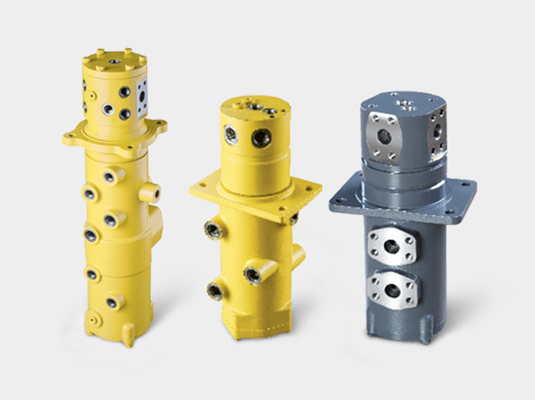
In the world of industrial machinery, the efficiency of fluid transfer can make or break your operation—and at the heart of this intricate dance lies the hydraulic rotary union. Whether you're managing high-pressure hydraulics, cooling systems, or pneumatic controls, selecting the right union is pivotal for uninterrupted performance. That's why we've sifted through the market to bring you a definitive ranking of top-tier solutions, spotlighting standout innovations from industry leaders like MOFLON. From leak-tight designs to multi-passage configurations, this guide cuts through the noise to help you find the perfect match for your application. Ready to elevate your fluid transfer game? Let's dive into our top picks.
What Sets a High-Performance Rotary Union Apart
Not all rotary unions are created equal. What separates a truly high-performance model from the rest is its ability to handle extreme conditions without compromising reliability. Whether it's operating under high pressure, variable speeds, or demanding thermal environments, a superior rotary union maintains a leak-free connection, minimizes wear, and ensures consistent fluid transfer. Advanced engineering, such as precision-machined seals and optimized bearing configurations, plays a key role in achieving this resilience, allowing the union to perform flawlessly over millions of revolutions.
Material selection is another defining factor. High-performance rotary unions often incorporate hardened alloys, specialized coatings, and high-grade ceramics that resist corrosion, abrasion, and thermal degradation. These materials aren't just about longevity—they directly impact the purity and temperature stability of the media being transferred, which is critical for industries like semiconductor manufacturing or food processing. The design also accounts for thermal expansion mismatches, ensuring that internal clearances remain optimal even as temperatures fluctuate widely.
Finally, the level of custom engineering and support behind a rotary union can make a dramatic difference. Off-the-shelf solutions might seem convenient, but a partnership that begins with understanding your specific application parameters—such as media type, flow rate, and mounting requirements—leads to a union that integrates seamlessly and operates with minimal maintenance. This tailored approach, combined with rigorous testing and field-proven improvements, yields a rotary union that doesn't just meet specifications but actively enhances system performance.
Industry-Specific Designs That Actually Deliver
Every industry speaks its own visual language, and great design starts by listening carefully to that dialect. Instead of repackaging the same generic layouts, the most effective solutions dig into the nuances of a sector—whether it’s the sterile, trust-building palette of healthcare, the bold kinetic energy of automotive, or the warm, tactile storytelling of hospitality. These designs don’t just look the part; they perform the part, using color, typography, and composition that are already embedded in the audience’s expectations, then subtly pushing those boundaries to create something memorable.
What separates a design that simply exists from one that genuinely delivers is its ability to solve real problems. In e-commerce, that might mean streamlining a checkout flow so intuitive that hesitation evaporates. For a legal firm, it could be a navigation structure that transforms dense jargon into clear pathways. By focusing on the specific friction points users face in their context—whether scrolling, searching, or comparing—industry-specific design turns passive viewers into active participants. It’s less about decoration and more about crafting an experience that feels inevitable and effortless.
The proof is in how these designs perform over time. A renewable energy company’s dashboard doesn’t just display data; it builds confidence through real-time clarity and accessible visual hierarchies. A fashion retailer’s mobile interface doesn’t chase trends; it mirrors the tactile joy of browsing a rack, with thoughtful micro-interactions that make discovery addictive. When design aligns tightly with the heartbeat of an industry, it stops being a layer on top and becomes the very fabric of business success—measurable not just in clicks, but in customer loyalty, operational clarity, and a brand that feels genuinely indispensable.
Balancing Speed and Pressure Without Sacrificing Durability
Pushing for faster turnaround often means ramping up workloads, but that pressure can quietly eat away at your equipment’s lifespan if you’re not careful. The trick lies in understanding where your systems actually gain speed—and where they’re just wearing themselves out. Many setups default to aggressive cycle times that sacrifice long-term reliability for short-term output, leaving you with unscheduled downtime and costly repairs. Instead, look at the interplay between component stress and operational tempo: small adjustments, like optimizing cooling intervals or fine-tuning load distribution, can keep things moving briskly without crossing the line into destructive territory.
It’s tempting to treat durability and high-pressure performance as opposing forces, but they’re more intertwined than most realize. When you crank up the pace, the real danger spots aren’t always obvious—seals degrade faster, bearings overheat, and material fatigue creeps in. A practical approach involves mapping your process’s stress points and then designing routines that spread the load more evenly. For instance, staggering high-demand tasks or integrating predictive maintenance alerts lets you maintain a brisk, consistent rhythm while catching wear before it becomes failure. The goal isn’t to baby the machinery; it’s to work it in a way that extends its peak condition for the long haul.
There’s a quiet art to reading the feedback your equipment gives you under strain. Instead of relying solely on manufacturer specs, watch how your specific environment shapes performance—ambient temperature, material variances, even operator habits shift the equation. Tuning your workflow to those real-world signals can unlock speeds that don’t just hold up on day one but keep delivering month after month. That might mean dialing back slightly at known friction points while compensating with smarter sequencing elsewhere, so the overall throughput stays high and the hardware stays intact. It’s a balancing act, but one that pays for itself in reliability and reduced overhead.
Material Choices That Prevent Leaks and Extend Lifespan
Selecting the right materials from the start makes all the difference when it comes to keeping a system leak-free over many years. Solid brass fittings, for example, resist corrosion far better than lower-grade alloys, and their natural durability means less chance of microscopic cracking that eventually leads to drips. In drinking water setups, opting for lead-free brass or stainless steel components also sidesteps health risks while maintaining exceptional pressure tolerance.
Sealing elements often go overlooked, yet they are usually the first point of failure. EPDM rubber gaskets and O-rings bring long-term elasticity and outstanding resistance to ozone, UV exposure, and temperature swings, so they won’t dry out or deform as quickly as generic synthetics. Pairing these with PTFE tape of the right density on threaded joints creates a reliable secondary barrier that handles vibration and slight misalignment without loosening.
In piping, PEX and high-grade copper each have their place. PEX flexibility minimizes the need for fittings behind walls—fewer connection points translate directly into fewer chances for hidden leaks. Copper, when used with properly fluxed soldered joints, forms a permanent, rigid network that withstands heat fluctuations and high pressure for decades. Ultimately, skipping cheap plastic components and investing in proven metals and elastomers pays off in a noticeably longer life cycle and far fewer emergency repairs.
Real-World Installations That Prove Long-Term Reliability
When a coastal wastewater treatment plant needed pumps that could withstand corrosive salt air and around-the-clock operation, the facility manager chose a set of ten vertical turbine pumps. A decade later, those same pumps are still running with minimal intervention—only routine bearing replacements and one impeller adjustment. The secret wasn't exotic materials or cutting-edge design; it was robust construction paired with a maintenance schedule that plant operators actually follow. Unlike many installations that degrade within five years due to overlooked grease points or misalignment, these units demonstrate that reliability stems from a combination of honest engineering and practical upkeep, not marketing promises.
In the food processing industry, a major dairy producer in the Midwest faced repeated failures with sanitary pumps that couldn't handle the thermal cycling of clean-in-place processes. After switching to a pump design with wider clearances and hardened seal faces, the plant recorded over 40,000 hours of operation before the first seal change. The maintenance lead noted that they stopped carrying spare pumps in inventory—a rare vote of confidence. This real-world example highlights that long-term reliability isn't about achieving perfection but about tolerating the unavoidable variances of daily production: temperature swings, operator errors, and deferred maintenance.
Perhaps the most telling case comes from a remote mining operation in Australia, where a set of slurry pumps were installed in 2008 and left to run with only quarterly inspections. When an engineer visited the site in 2022, he expected to find corroded volutes and worn impellers. Instead, the pumps were still within performance spec, having moved over 5 million tons of abrasive slurry. The mine's superintendent simply stated, "They were installed correctly, and we didn't mess with them." This underlines a crucial truth: real reliability comes not from how a pump performs on day one, but from how forgiving it is when neglected—and how little attention it truly demands over its lifetime.
How Maintenance-Friendly Builds Reduce Total Downtime
When equipment is designed with maintenance in mind, the most immediate benefit is faster access to critical components. Instead of wrestling with cramped panels or hunting for obscure fasteners, technicians can quickly reach the parts that need routine checking or replacement. This cuts out wasted minutes that add up across dozens of service events, substantially shrinking the total hours a system spends offline each year.
Simplified diagnostics also play a pivotal role. Maintenance-friendly builds often include clearly labeled test points, modular wiring, and easy-to-read error indicators. When a fault occurs, the team spends less time tracing symptoms and more time applying the fix. Rapid troubleshooting reduces the mean time to repair, which directly lowers the cumulative downtime that eats into production schedules.
Finally, well-organized spare parts storage and straightforward reassembly procedures prevent the secondary delays that plague many service operations. When a machine is built to be maintained, the risk of misplaced components or incorrect reassembly drops dramatically. Less rework means fewer unplanned outages and a smoother return to full operation, keeping overall downtime to a bare minimum.
FAQ
A hydraulic rotary union is a precision mechanical device that allows fluid, such as oil or coolant, to flow from a stationary source into a rotating component without leakage. It’s critical because it maintains a reliable seal under pressure and rotation, enabling continuous machinery operation in applications like hydraulic tooling, packaging equipment, or rotary indexing tables.
You need to match the union’s flow capacity and pressure rating to your system’s requirements. Start by reviewing the maximum operating pressure and flow rate of your hydraulic circuit, then compare it with the manufacturer’s specifications. Common sizes range from 1/8-inch to 2-inch ports with pressure ratings from a few hundred to several thousand PSI. Always include a safety margin to handle surges.
The key factors are the internal seal design, bearing arrangement, and material selection. High-performance unions use low-friction seals like PTFE composites, precision ball bearings to handle RPMs, and hardened steel rotors that resist wear. Some also incorporate balanced mechanical seals to reduce heat generation and maintain integrity at speeds above 3,000 RPM.
Yes, multi-passage rotary unions are available and essential when you need to transfer several different fluids simultaneously or operate independent circuits in a rotating assembly. For instance, a single unit can feed hydraulic oil for clamping, coolant for cutting, and air for blow-off in a CNC rotary table. The passages are isolated to prevent cross-contamination.
Seal wear and leakage are the top offenders, often caused by contamination, excessive speed, or pressure spikes. To prevent this, install a proper filtration system, stay within the rated limits, and perform regular visual inspections for drips or unusual temperature. Using the correct lubrication and replacing seals on a schedule also extends life dramatically.
Several names stand out: Deublin, known for high-speed and custom solutions; Moog, with robust designs for heavy-duty industrial use; GAT, a leader in high-pressure applications; and Rotary Systems, which offers a broad range of stock and engineered unions. Each has its niche, so the choice depends on your pressure, speed, and fluid compatibility needs.
Start with a clean mounting surface and avoid using too much thread sealant to prevent contamination. Align the union carefully to prevent side-loading on the bearings. Once running, monitor for increased drag or noise, and keep the fluid clean. Most manufacturers recommend periodic inspections of the seals and a rebuild at defined intervals—often every 10,000 hours or so for standard applications.
Although the terms are sometimes used interchangeably, a rotary union generally offers a precision-designed, low-torque seal for continuous rotation, while a swivel joint is often simpler and meant for occasional movement or lower speeds. Rotary unions are the go-to for dynamic, 360-degree continuous fluid transfer at higher speeds and pressures.
Conclusion
A hydraulic rotary union that genuinely excels does more than just connect lines—it integrates precision engineering with practical, real-world toughness. The units that consistently rise to the top of any ranking share an uncompromising focus on sealing technology, often blending advanced polymers with hardened steel to virtually eliminate leaks even under extreme pressure spikes. Industry-specific tailoring is the real game changer: a union designed for a high-speed machining center looks nothing like one engineered for a marine deck crane, yet both deliver because their internal geometries, bearing arrangements, and seal materials are chosen for the exact thermal and mechanical stresses they will face. The best manufacturers prove their claims not with glossy brochures but with documented installations where identical models have logged tens of thousands of hours without a single drop of cross-contamination—data that speaks louder than any lab test.
Beyond initial performance, the top picks distinguish themselves through intelligent maintenance features that turn hours of downtime into minutes. Quick-change cartridge seals, easily accessible wear indicators, and modular designs mean a technician can refresh a union in place without disassembling adjacent equipment. Materials play a hidden but critical role here: nitrided surfaces resist scoring, while specially formulated elastomers maintain flexibility after millions of cycles, directly extending service intervals. Balancing rotational speed with fluid pressure no longer requires compromising on lifespan because computational fluid dynamics and finite element analysis allow engineers to carve out internal channels that minimize turbulence and heat buildup. When you factor in the long-term savings from reduced leakage, lower energy consumption, and fewer interruptions, the highest-ranked rotary unions genuinely earn their reputation as seamless conduits for fluid transfer in the most demanding environments.
Contact Us
Contact Person: Xiangpin Li
Email: [email protected]
Tel/WhatsApp: 86 186 1706 8578
Website: https://www.moflon.com