

China Shunt Resistor Advancements for High-Precision Current Sensing
2026-07-11
In the fast-evolving landscape of power electronics, China's shunt resistor technology is breaking new ground for high-precision current sensing. As demands for accuracy soar in electric vehicles, renewable energy, and smart grids, traditional solutions often fall short. That's where cutting-edge advancements come into play, reshaping how we measure current with minimal drift and exceptional thermal stability. Curious about the innovations driving this change? Milliohm is at the forefront, delivering ultra-low resistance components that push the boundaries of efficiency and reliability. Dive in to explore how these developments are redefining performance benchmarks and unlocking new possibilities in precision measurement.
Beyond Manganin: New Alloy Pathways Elevate Shunt Precision
Manganin has long been the benchmark for precision shunts, prized for its low temperature coefficient and stable resistance. Yet, as current sensing demands tighten in electric vehicles, grid monitoring, and industrial automation, its limitations begin to show. Subtle drift, sensitivity to mechanical strain, and a narrow sweet spot in temperature compensation leave engineers searching for materials that can hold tighter tolerances over a wider range of real-world conditions.
Emerging alloy families are stepping into this gap with tailored electronic structures that minimize scattering and parasitic thermoelectric voltages. By doping copper-nickel bases with trace germanium or tin, metallurgists tune the resistance slope to near flatness across decades of temperature swing. Other avenues explore amorphous or nanocrystalline composites that break the traditional trade-off between resistivity and thermal drift, achieving single-digit parts-per-million stability without the bulk of a traditional shunt.
These new pathways are not a wholesale replacement for Manganin but a strategic upgrade for the most noise-sensitive nodes in a system. From airborne power converters to smart metering, selective adoption yields measurable gains in efficiency and accuracy, pushing the art of current measurement well past the limits of legacy alloys.
Laser-Trimming Mastery: How China Nails Sub-Milliohm Tolerances
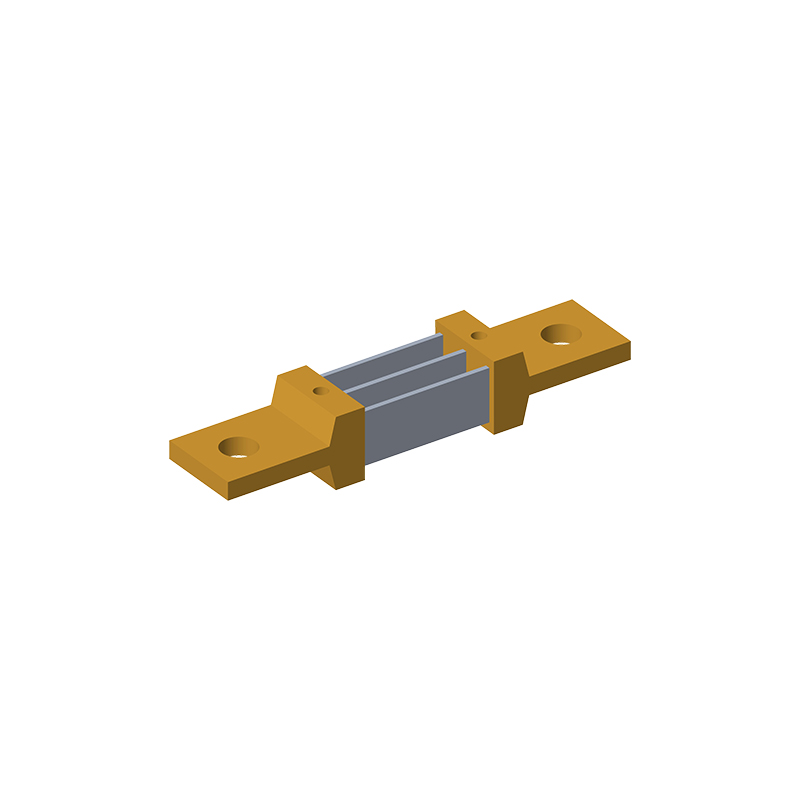
Achieving sub-milliohm precision in resistor trimming isn't just about firing a laser at a resistive element. It demands a deep integration of real-time measurement feedback and picosecond-level control over pulse duration. Chinese manufacturers have refined a closed-loop process where the laser dynamically adjusts its energy based on in-situ four-wire Kelvin readings, ensuring that every cut brings the resistance closer to the target without overshooting. This means tolerances as tight as 0.05% become routine, even on mass-produced current-sense shunts.
What really sets these techniques apart is the ability to maintain stability after trimming. Thermal stress from the laser can cause micro-cracks or resistance drift over time, but advanced algorithms now predict the heat-affected zone and compensate with a multi-pass, low-power finishing trim. The result is a component that stays within spec across temperature swings and load cycles—something vital for electric vehicle battery management systems where a drift of a few micro-ohms could skew current monitoring.
The physical design of the resistance element itself also plays a huge role. Instead of simple flat films, you'll find complex serpentine or slot-cut patterns that direct the laser path along precise geometries, maximizing the number of incremental adjustments possible in a tiny footprint. Combined with proprietary alloy formulations that respond predictably to laser pulses, these manufacturers aren't just hitting sub-milliohm targets—they're doing it with yields that make the economics viable for high-volume industries.
Thermal Drift Defeated: The Rise of Self-Compensating Designs
Engineers have long wrestled with thermal drift—the subtle but relentless foe that skews sensor readings and nudges precision mechanics out of alignment as temperatures shift. Traditional fixes like temperature-controlled enclosures or software correction often add bulk, cost, and latency, and they rarely address the underlying instability.
Self-compensating designs tackle the problem at its root by embedding materials or geometries that inherently counter thermal expansion. Think of a bimetallic strip in reverse: instead of exploiting mismatch for actuation, clever arrangements cancel out unwanted movement. In MEMS accelerometers, for instance, paired proof masses with opposing thermal responses keep the zero point stable without active intervention.
This shift isn't just academic. From downhole drilling sensors that shrug off searing heat to space telescopes that hold focus through wild temperature swings, self-compensation has slashed dependence on external controls. The result is simpler, more robust equipment that maintains accuracy where traditional approaches falter.
Compact Shunts, Mighty Currents: Redefining Density Limits
Shunt resistors have long been the unsung heroes of current sensing, silently shouldering the burden of measurement in power electronics. Yet as systems shrink and current demands skyrocket, the conventional wisdom governing their design buckles under the strain. The challenge isn't simply cramming more capability into less space—it's a fundamental reimagining of how materials, geometry, and thermal dynamics can coalesce to tame the heat and drift that plague dense interconnections. By pushing past the old trade-offs between size, precision, and power handling, a new crop of compact shunts is turning what was once a physical impossibility into a practical reality.
At the heart of this shift lies a material revolution. Traditional manganese-copper alloys, while stable, hit a wall when scaled down—their thermal conductivity can't shed heat fast enough to prevent resistance drift at sustained high loads. Enter electron-beam welded composites and exotic foil blends that marry near-zero temperature coefficients with thermal efficiency that borders on counterintuitive. These materials, often combining a resistive element with a copper thermal pathway, siphon heat away from the sensing zone, allowing a shunt that fits on a fingertip to handle currents that would liquefy its predecessors. The result is a component where the limiting factor is no longer the shunt itself, but the creativity of the engineer placing it on the board.
The implications ripple far beyond incremental improvement. In electric vehicle traction inverters, where every cubic centimeter and milliohm of loss matters, these dense shunts enable module designs that were previously penned in by bulky sensor arrays. Server farms, too, benefit as power rails tighten and efficiency targets climb; a shunt that can inhale hundreds of amps without breaking a sweat becomes the linchpin of a leaner, cooler architecture. It's a quiet kind of defiance—these small components are rewriting the rules of what's possible, proving that in the domain of current measurement, mighty things really do come in compact packages.
EV Battery Management Gets a Sensing Upgrade Under the Hood
Battery packs in modern EVs generate massive amounts of data, but legacy sensing methods struggle to capture the full picture of cell health. Voltage and current readings alone often miss subtle anomalies that signal early degradation or thermal runaway. This is pushing automakers to rethink what happens under the hood, where a quiet revolution in sensor fusion and micro-electromechanical systems (MEMS) is changing the game.
New sensing architectures now embed tiny, low-power sensors directly within modules to measure parameters like internal pressure, gas composition, and temperature gradients at the cell level. Combined with edge-processing algorithms, these sensors can detect lithium plating or electrolyte leakage long before they become critical. The result is a battery management system that not only reacts faster but also learns and adapts, extending pack life and boosting safety without adding bulky hardware.
Soldering Science Stops Signal Loss in High-Vibration Environments
In high-vibration environments, even the most carefully designed electronic assemblies face a relentless assault. Microscopic fractures can form within solder joints as constant shaking stresses the connections, eventually causing intermittent contact or complete failure. This signal degradation isn't just a nuisance—in critical applications like aerospace avionics or automotive safety systems, it can have catastrophic consequences. Engineers have long grappled with this challenge, but the science of soldering has evolved sophisticated countermeasures that go far beyond simply reflowing a tin-lead alloy.
Modern soldering science tackles signal loss at the metallurgical level. By engineering specific alloy compositions—often adding small percentages of silver, copper, or indium—manufacturers can create joints that resist grain boundary sliding and crack propagation. The key lies in controlling the intermetallic compound layer, which, when formed correctly, provides a durable barrier against mechanical stress. Advanced techniques like vapor phase soldering ensure uniform heating, while post-process thermal conditioning relieves residual stresses. Additionally, conformal coatings and underfill materials lock components in place, damping vibration energy before it reaches the solder connections.
The result is a dramatic improvement in long-term signal integrity under duress. Instead of relying on bulky mechanical fasteners or redundant circuits, designers now trust precisely formulated solder joints to maintain low-impedance pathways even during sustained shock and vibration. Field data from downhole drilling equipment and military helicopters shows that properly engineered soldered assemblies can outperform connectors and wiring harnesses in both reliability and weight efficiency. This quiet revolution in material science keeps data flowing when every bit counts, proving that sometimes the smallest details—the very bonds that hold a circuit together—make the biggest difference.
FAQ
Chinese manufacturers have introduced metal alloy shunt resistors with ultra-low resistance values and minimal temperature coefficient of resistance (TCR), enabling accurate current sensing even under fluctuating thermal conditions. Improved electron beam welding techniques have also enhanced joint reliability between the resistive element and copper terminals, reducing parasitic inductance.
By integrating low-ohmic shunts with low self-heating characteristics, EV battery management units can precisely monitor charge and discharge currents, leading to better state-of-charge estimation and prolonged battery life. The shunts’ compact designs also save space in densely packed power modules, contributing to overall system lightness and energy efficiency.
Specialized alloys like manganin and zeranin, sometimes modified with rare-earth elements, are being employed for their low electromotive force (EMF) against copper and inherent long-term stability. Additionally, composite materials with ceramic substrates are used to dissipate heat effectively, ensuring consistent performance under high current surges.
New shunt designs feature four-terminal Kelvin connections that isolate voltage sensing paths from high-current paths, significantly reducing measurement errors caused by lead resistance. Robust encapsulation methods protect against moisture and vibration, making them reliable for harsh factory environments where precise motor control feedback is critical.
As portable electronics and IoT devices demand smaller PCBs, Chinese engineers are developing thin-film shunt resistors with high power density. Using semiconductor fabrication techniques, they can pattern resistive layers on tiny chips, achieving precise resistances in 0201 or even smaller packages, which helps miniaturize energy monitors and wearable health devices.
High-precision, high-power shunts are essential for tracking maximum power point in solar inverters and monitoring battery storage banks. Recent Chinese designs can handle hundreds of amps with low temperature drift, ensuring accurate data for grid-tied inverters, thus improving overall conversion efficiency and supporting more stable renewable integration.
Conclusion
China's shunt resistor landscape is undergoing a quiet but decisive transformation. The traditional reliance on manganin-based alloys is giving way to novel material formulations that push precision beyond established limits. These new alloys, often paired with advanced laser-trimming processes, enable shunt resistors to hit sub-milliohm resistance values without sacrificing stability. The trimming techniques have reached a level of mastery where tolerances are nailed down to remarkably tight windows, directly boosting current measurement accuracy. At the same time, the perennial issue of thermal drift is being tackled head-on. Designers are now integrating self-compensating structures into the shunt architecture, neutralizing temperature-induced errors that once plagued high-precision readings. This dual focus on material science and manufacturing finesse is setting a new benchmark for what shunt resistors can achieve in terms of accuracy and resilience.
These gains are not confined to the lab. They are rapidly finding their way into demanding real-world systems, especially in electric vehicle battery management. Here, the compact size of modern shunts belies their ability to handle massive currents, redefining density limits and enabling more efficient power monitoring in tight spaces. Under the hood of EVs, sensing has undergone a quiet upgrade, with shunts delivering the high-fidelity data needed for improved range estimation and safety. Yet, no precision matters if the connection fails. That's why breakthroughs in soldering science are crucial—engineers have honed techniques to prevent signal degradation in high-vibration environments, ensuring that every micro-ohm stays stable over a vehicle's lifetime. Together, these advancements paint a picture of a component class that has matured into a cornerstone of high-performance electronics, with China at the forefront of its evolution.
Contact Us
Contact Person: Yuying Gao
Email: [email protected]
Tel/WhatsApp: +86 18926013721
Website: https://en.milliohm.net/